


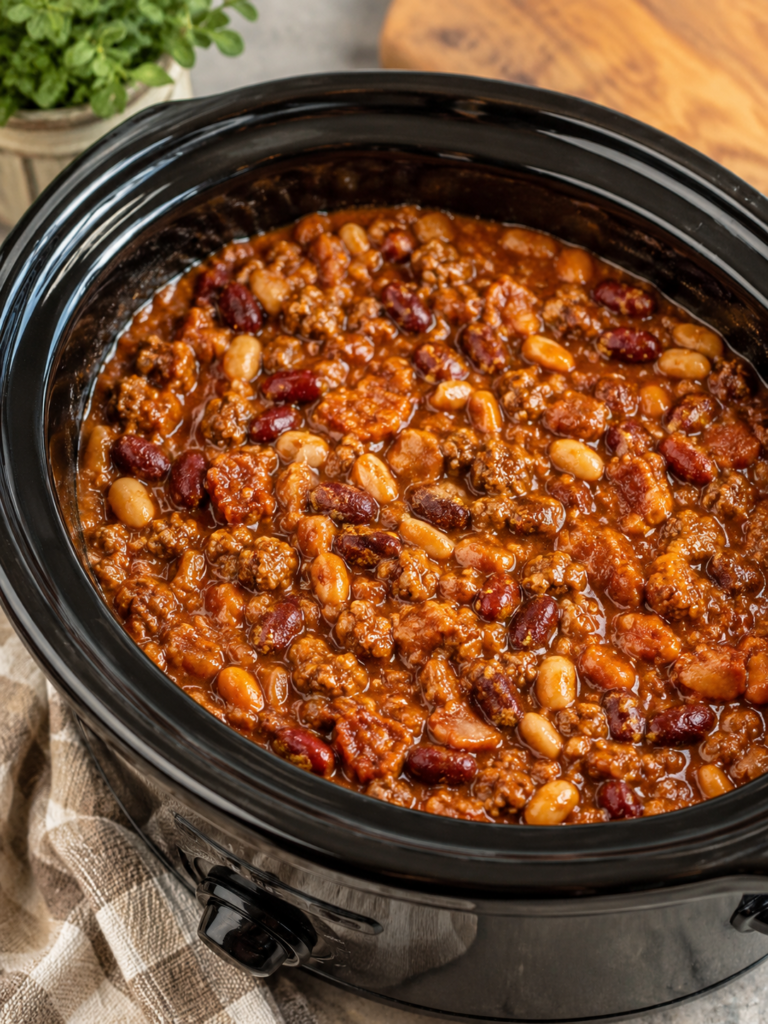
The Recipe That Shows Up at Every Cookout and Never Has Leftovers
There are recipes that get made once and forgotten, and there are recipes that become the thing people request every time there is a cookout, a potluck, or a family gathering. These baked beans are firmly in the second category. The kind of recipe that gets written on a card and passed along because people want to make it themselves.
Ground beef and bacon browned together, cooked down with onion, then combined with kidney beans, pork and beans, butter beans, ketchup, barbecue sauce, mustard, molasses, chili powder, and pepper. Everything goes into a baking dish or a crockpot and comes out deeply savory, slightly sweet, smoky, and thick enough to scoop. This is not a subtle dish. It is bold and filling and the kind of thing that makes a plate feel complete.
It makes 20 to 24 servings, which sounds like a lot until you serve it to a crowd and realize it was not enough. The oven version bakes for an hour and develops a slightly caramelized top. The crockpot version cooks low and slow for four to six hours and produces a deeper, more integrated flavor. Both are worth knowing.
This is the recipe that earns its place as a side dish that is more satisfying than most main dishes. Make it once and you will understand why it never has leftovers.
What Makes This Version Worth Making From Scratch
Canned baked beans are convenient and fine for a Tuesday night. But they are also sweet in a one-dimensional way, low in protein, and do not have the savory depth that comes from starting with browned beef and bacon. This recipe is worth making from scratch because the result is categorically different from anything that comes out of a can.
Browning the ground beef and bacon together is the step that builds the flavor foundation. The fat from the bacon renders and bastes the beef as it browns. The fond that builds on the bottom of the skillet carries concentrated savory flavor that gets incorporated when the onion goes in and the liquid ingredients follow. That foundation is what gives the finished beans a depth and richness that you cannot achieve by opening a can and adding seasoning on top.
Three kinds of beans give you variety in texture and flavor. Kidney beans are firm and hold their shape well. Butter beans are creamy and slightly sweet. Pork and beans are softer and come pre-seasoned in a tomato sauce that adds to the overall base. Together they create a bean mixture that is more interesting than any single bean variety.
Molasses is the ingredient that distinguishes a great baked bean recipe from an average one. It adds a deep, slightly bitter sweetness that is different from ketchup or barbecue sauce sweetness. It is darker and more complex and it is what gives the sauce that characteristic thick, almost syrupy quality that coats every bean. Do not substitute with honey or maple syrup. The molasses flavor is specific and important.
The long bake time or slow cooker time is what allows all these flavors to integrate and develop. You could eat this after 30 minutes and it would be fine. You eat it after an hour in the oven or six hours in the crockpot and it is something else entirely. The beans absorb the sauce, the sauce thickens, and the whole dish becomes cohesive in a way that only time can create.
Let’s Talk Ingredients
1 lb ground beef
Browned with the bacon as the protein base of the dish. An 80/20 blend gives you enough fat to render with the bacon without the dish becoming greasy. The browned beef adds a savory, meaty depth to the sauce that bean-only baked beans do not have. Drain excess grease after browning but leave a tablespoon or so in the pan for cooking the onion.
1 lb bacon, chopped
Chopped before cooking so it renders evenly and distributes throughout the dish. Bacon adds smokiness, saltiness, and fat that flavors everything it touches. Regular cut bacon works well. Thick-cut bacon gives you more substantial pieces in the finished dish. The bacon cooks down significantly, so a full pound spread across 20 to 24 servings is not as much as it sounds.
1 onion, chopped
Added to the skillet after the meat is browned and most of the excess grease is drained. The onion cooks in the remaining fat and picks up the browned bits from the bottom of the pan. It softens and sweetens as it cooks and adds a savory foundation to the sauce. Yellow onion is the right choice here. It mellows and sweetens during the long cook time in a way that white or red onion does not.
1 cup ketchup
One of the two main sauce components. Ketchup adds sweetness, acidity, tomato flavor, and body to the sauce. It combines with the barbecue sauce to create the thick, tangy-sweet base that baked beans are known for. Use a standard ketchup. Reduced-sugar ketchup works if you want to lower the sugar content.
1 cup barbecue sauce
The second sauce component. Adds smokiness, more sweetness, and a complexity that ketchup alone does not have. Use whatever barbecue sauce you like. A smoky variety deepens the overall flavor. A sweeter variety makes the beans more candy-like. The combination of ketchup and barbecue sauce together creates a sauce that is richer and more layered than either one alone.
4 tbsp prepared mustard
Adds sharpness and a slight tang that cuts through the sweetness of the ketchup, barbecue sauce, and molasses. Yellow mustard is the traditional choice and the right one here. Its vinegary, slightly sharp flavor is what balances a sauce that would otherwise be too sweet. Do not use Dijon, which has a different flavor profile that does not work as well in this context.
4 tbsp molasses
The ingredient that makes these taste like real baked beans. Blackstrap molasses has the most intense, slightly bitter flavor. Regular molasses is sweeter and more mild. Both work. The molasses adds a dark, complex sweetness that is different from any other sweetener and is what gives the sauce its characteristic thickness and depth. This is not the place to substitute.
1 tsp chili powder
Adds warmth and a subtle heat to the sauce. Chili powder is a blend of dried chiles and spices rather than straight cayenne, so the heat is mild and background rather than sharp. It adds complexity to the sauce without making the beans spicy. If you want more heat, increase to two teaspoons or add a pinch of cayenne separately.
3/4 tsp black pepper
Background seasoning that adds sharpness and warmth. Three-quarters of a teaspoon across a dish that makes 20 to 24 servings is mild. It is there to balance the sweetness rather than to be noticeable as pepper.
1 can (16 oz) red kidney beans, drained
The firmest of the three beans and the one that holds its shape best through the long cook time. Red kidney beans have a slightly earthy, robust flavor that stands up to the bold sauce. Drain and rinse before adding to remove the canning liquid, which would add unnecessary sodium and a slightly metallic flavor.
2 cans (16 oz each) pork and beans
The most traditional baked bean variety. Pork and beans come in a tomato-based sauce and are softer and more tender than kidney beans. They add body to the dish and their existing sauce contributes to the overall flavor of the finished beans. Do not drain these. The liquid is part of what makes the sauce thick and flavorful.
2 cans (16 oz each) butter beans, drained
The creamiest of the three varieties. Butter beans are large, white, and have a soft, slightly starchy texture that adds a different quality to the bean mixture. They absorb the sauce beautifully during the long cook time. Drain before adding so they do not make the sauce too thin.
Oven vs Crockpot — Which One Is Right for You
This recipe gives you two methods for a reason. The oven version and the crockpot version produce slightly different results and work better in different situations.
The oven at 350 degrees for one hour gives you baked beans with a slightly caramelized top layer. The edges of the beans closest to the surface take on a slightly darker, stickier quality from direct oven heat. The sauce thickens from the top down. This version is right when you want the beans ready in about an hour and you want that slightly caramelized top.
The crockpot on low for four to six hours gives you a more deeply integrated, fully developed flavor. The slow, gentle heat allows the beans to absorb the sauce gradually and every bean becomes flavored all the way through rather than just coated on the outside. The sauce thickens more evenly throughout. This version is right when you have time and want the maximum flavor development.
Both methods start the same way. Brown the beef and bacon, cook the onion, combine everything. The difference is where it goes from there. If you are making these for a Sunday cookout, start the crockpot in the morning and let it go. If you need them by dinner on a weeknight, the oven version is the move.
Storage is the same for both versions. Cool completely and store in an airtight container in the fridge for up to five days. Reheat on the stovetop over medium-low heat with a splash of water to loosen if they have thickened, or in the microwave covered with a damp paper towel. These also freeze well for up to three months. Cool completely, portion into freezer-safe containers, and thaw overnight in the fridge before reheating.