


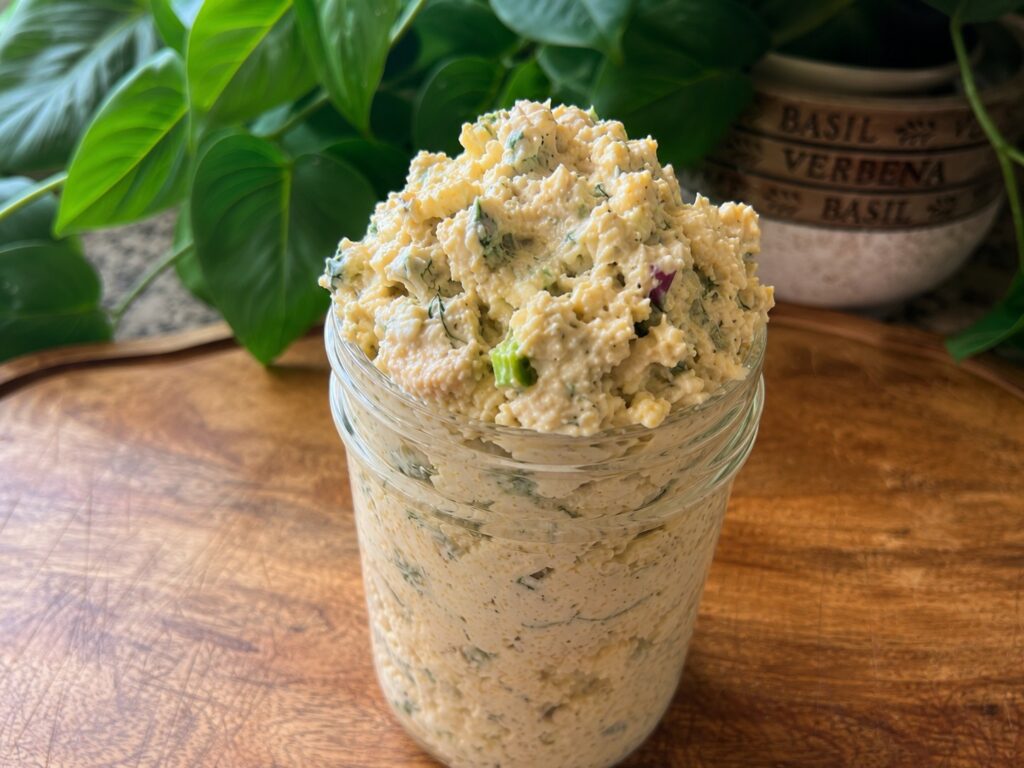
The Chicken Salad That Actually Gets Better the Next Day
Most chicken salads are fine. Creamy enough, reasonably flavorful, something you eat because it is there. This one is different. It is the kind of chicken salad where you make a batch on Sunday and find yourself looking forward to lunch on Tuesday because you know it is in the fridge.
The base is blended cottage cheese, which creates a smooth, protein-rich dressing that coats the chicken and holds everything together without the heaviness of a mayo-forward version. The cottage cheese gets pulsed in a food processor with celery, green onions, red onion, fresh dill, and fresh parsley until everything is finely chopped and incorporated into the dressing. Then it goes over three cups of shredded rotisserie chicken with diced apple folded in at the end.
The apple is the thing. A half apple diced into small pieces adds a natural sweetness and a juicy crunch that lifts the whole salad out of the standard chicken salad category. Against the fresh dill, the savory cottage cheese dressing, and the crisp celery, it creates a balance that makes every bite more interesting than the last.
Thirty-one grams of protein per serving. Six servings per batch. Tastes better after 30 minutes in the fridge and better still the next day. This is the meal prep chicken salad worth making every week.
Fresh Herbs and Apple — Why This Version Stands Out
The chicken salad on the blog that uses Dijon and dill is a solid recipe and it earns its place in the rotation. This one is related but distinctly different. The difference is in the technique and the flavor profile.
Instead of just blending the cottage cheese and stirring it in, this recipe pulses the vegetables and herbs into the blended cottage cheese in the food processor. The celery, green onions, red onion, dill, and parsley get finely chopped and incorporated directly into the dressing rather than staying as separate pieces you encounter in the salad. The result is a dressing that tastes like all those things rather than a plain cottage cheese base with herbs scattered through it. Every spoonful of dressing has herb flavor built in.
Fresh dill and fresh parsley together give the dressing a brightness that dried herbs cannot replicate in a cold preparation like this. Dill adds a slightly tangy, herby quality. Parsley adds freshness and color. Both are worth using fresh here specifically because this salad is served cold and the herbs do not get cooked, which means their full, vibrant flavor comes through directly in the dressing.
The apple is the finishing move that makes this version memorable. Half a medium apple, diced and folded in at the end. It adds sweetness, crunch, and juiciness that contrasts with the savory, herby dressing and the tender chicken. A Honeycrisp or Fuji apple gives you the most sweetness and the best crunch. A Granny Smith gives you a tartness that works differently but also very well. Either way, the apple is what people ask about when they eat this salad for the first time.
Let’s Talk Ingredients
3 cups shredded rotisserie chicken
Three cups for six servings gives you a generous chicken-to-dressing ratio. Rotisserie chicken is the right choice because it is already cooked and seasoned, which means the salad has flavor built into the protein itself rather than relying entirely on the dressing. Shred it into small, even pieces so it mixes well and distributes through every serving consistently. A mix of white and dark meat gives you the best texture and flavor.
1 cup low-fat cottage cheese
Blended smooth in the first step before anything else goes in. Full-fat gives a richer result but low-fat keeps the macros at the 31 grams of protein per serving number listed. Drain any liquid sitting on top before blending. The blended cottage cheese becomes the base that everything else gets incorporated into in the food processor. It needs to be completely smooth before the vegetables and herbs go in.
2 celery stalks, roughly chopped
Pulsed into the blended cottage cheese in the food processor. The rough chop before processing is fine because the processor will do the rest. Celery adds crunch and a mild, slightly bitter freshness that keeps the salad from tasting too rich. Because it gets pulsed rather than stirred in whole, the celery flavor distributes through the dressing rather than existing only in the pieces you happen to eat.
2 green onions
Added to the food processor with the celery and herbs. Green onions have a mild, fresh onion flavor that works alongside the sharper red onion without being aggressive. Both the white and green parts go in. They get pulsed fine along with everything else and their flavor becomes part of the dressing base.
1/2 medium apple, diced
Folded in at the end after everything else is combined, rather than pulsed in the food processor. Dicing and folding keeps the apple pieces intact so you get actual chunks of apple in the salad with visible texture and juiciness. Processing it with everything else would turn it into apple-flavored dressing, which is not what you want. Honeycrisp, Fuji, or Gala are the sweetest options. Granny Smith gives you a tart contrast. Use whatever apple you have.
1/4 cup red onion
Pulsed into the dressing with the other vegetables. Red onion has more sharpness and bite than green onion, which adds depth to the dressing. A quarter cup for three cups of chicken is the right ratio. Enough to taste without being overwhelming. If you find raw red onion too sharp, soak it in cold water for 10 minutes before adding to the processor.
2 tbsp fresh dill
One of the two main herbs in the dressing. Fresh dill has a bright, slightly tangy, herby quality that is one of the most natural pairings for chicken salad. It is the herb that makes this taste specifically like this rather than like a generic herb chicken salad. Do not substitute dried dill in a cold preparation like this. The flavor difference is significant. Fresh dill is worth seeking out.
2 tbsp fresh parsley
The second herb. Works alongside the dill to add freshness and a slightly more neutral herby note that rounds out the dill without competing with it. Both go into the food processor together and get pulsed fine into the dressing. Flat-leaf parsley has more flavor than curly. Either works.
Salt and black pepper, to taste
Season the dressing after processing and again after folding in the chicken and apple. Taste at each stage and adjust. The rotisserie chicken brings some seasoning but the dressing needs to be well-seasoned on its own before it goes on the chicken.
1 tsp Dijon mustard (optional)
Adds sharpness and a slight tang if you want it. Goes into the food processor with the vegetables. A teaspoon is subtle and works in the background. If you prefer a cleaner, herb-forward dressing without the mustard note, skip it. This salad works well either way.
1 tbsp lemon juice (optional)
Adds brightness and helps prevent the apple from browning. Goes into the processor with everything else. A tablespoon is enough to lift the flavor without making the dressing taste lemony. If you are using Granny Smith apple, the natural tartness of the apple means you probably do not need the lemon. With sweeter apples it helps balance.
Chopped pecans or walnuts (optional)
Folded in with the apple for extra crunch and a nutty richness. A small handful per batch adds texture that complements the apple beautifully. Pecans are sweeter and softer. Walnuts are slightly more bitter and more substantial. Toast them briefly in a dry pan first for more flavor before adding to the salad.
Why This Salad Gets Better as It Sits
The refrigeration time in this recipe is not just a suggestion. Thirty minutes is the minimum and an hour is better. Overnight is better still. This is one of the few salads where waiting genuinely improves the result rather than degrading it.
As the salad sits, the herb-infused cottage cheese dressing penetrates the chicken more deeply. The apple releases a small amount of juice that mingles with the dressing and adds sweetness throughout rather than just in the bites that have a piece of apple. The red onion mellows slightly in the acidic dressing. Everything becomes more cohesive and the flavors develop a depth that a freshly made batch does not have.
This is why it is specifically worth making as a Sunday meal prep recipe. Make it in the morning, refrigerate it all day, and by dinner or Monday lunch it is at its best. It holds well in the fridge for four days and the flavor improves through at least the first two days.
Stir it before serving since the dressing can settle slightly and some liquid may separate at the surface. A quick stir brings it back together. If it looks a little dry after a few days, a small spoonful of cottage cheese or a splash of lemon juice stirred in refreshes it.
The serving options in this recipe are genuinely wide. On a croissant it tastes like something from a specialty deli. In lettuce cups it is light and low-carb. On sourdough toast it is the same format as the other egg salads on the blog. Over greens with a light vinaigrette it becomes a composed salad. All of these are legitimate and good. The croissant version specifically is worth trying at least once.