


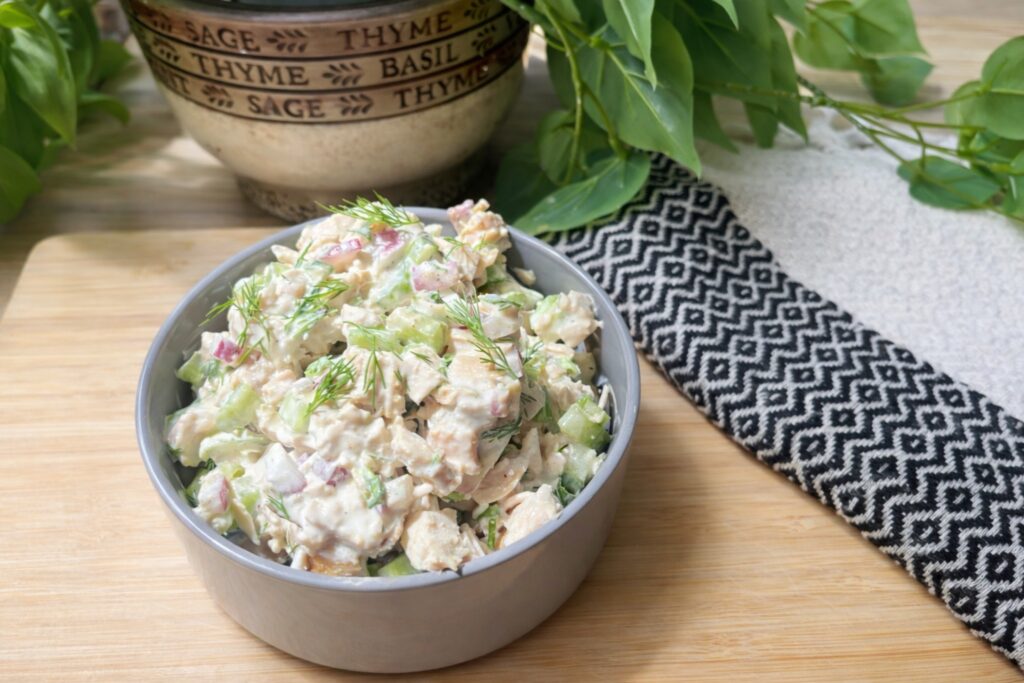
The Chicken Salad That Replaced Lunch Ruts
Chicken salad is one of those things that sounds boring until you have a version that is actually good. Most of the time it is overloaded with mayo, underseasoned, and eaten out of obligation rather than because you actually want it. This one is different.
The base is blended cottage cheese instead of straight mayo. It sounds like a swap that should not work but it does. Once blended smooth it is creamy and rich and picks up the flavor of everything around it. The Dijon mustard brings sharpness. The fresh dill adds an herby brightness. Celery gives you crunch. Red onion and green onion add bite and freshness. The result is a chicken salad that tastes bold and well-seasoned rather than pale and forgettable.
Twenty-eight grams of protein per serving. Ten minutes of actual work. It holds in the fridge for four days and gets better as it sits. You can eat it on sourdough toast, in lettuce wraps, stuffed into a pita, or straight from the bowl with a fork. It is one of those recipes that earns its place in your regular rotation fast because it covers a lot of situations without asking much from you.
If you have been doing the same grilled chicken and salad situation on repeat and need something that still fits the way you are eating but actually feels like food you want to eat, this is it.
No Mayo Required and You Will Not Miss It
The cottage cheese situation is worth explaining because it is the thing people are most skeptical about before they try it. Full-fat cottage cheese blended completely smooth has a texture that is close to a thick, creamy dressing. It does not taste like cottage cheese once it is combined with Dijon mustard, fresh dill, and seasoning. What it tastes like is a well-made, creamy chicken salad dressing that happens to have a lot of protein in it.
Mayo-based chicken salad can be heavy and one-dimensional. The fat content is high and the flavor tends to be flat unless you add a lot of other things to compensate. The cottage cheese base is lighter in texture but still creamy, and it lets the other flavors in the salad come through more clearly. The Dijon is more present. The dill is more present. The onion and celery read more sharply against a lighter base.
Dijon mustard is doing real work here, not just adding a background note. Two tablespoons is enough to give the salad a genuine mustard sharpness that cuts through the creaminess and makes the whole thing taste more alive. Do not swap for yellow mustard. The flavor is too mild and sweet and it will flatten everything out.
Fresh dill is the herb that ties it together. It has a bright, slightly tangy quality that pairs naturally with chicken and mustard and keeps the salad tasting fresh rather than heavy. Dried dill is a significant step down in a cold preparation like this. Use fresh if you can.
Let’s Talk Ingredients
2 cups rotisserie chicken, chopped
Rotisserie chicken is the right call for this recipe. It is already cooked, already seasoned, and it has a juiciness that plain poached or baked chicken breast often lacks. Pull the meat from the bones and chop it into small, even pieces. A mix of white and dark meat gives you more flavor and a better texture than white meat alone. If you are cooking your own chicken, boneless thighs are a good choice for the same reason. Season simply before cooking since the dressing will carry most of the flavor.
1 cup cottage cheese, blended smooth
Full-fat cottage cheese gives you the creamiest, richest result. Low-fat works but the dressing will be slightly thinner and less satisfying. Blend it completely before adding it to the bowl. An immersion blender, a regular blender, or a food processor all work. Blend until there are no visible curds and the texture is completely smooth. If you add it unblended the salad will have an uneven, lumpy texture that does not coat the chicken the way a smooth dressing does.
3/4 cup celery, chopped
The crunch element. Chop it into small pieces so you get texture in most bites without any one piece being too dominant. Celery also adds a mild, slightly bitter freshness that contrasts well with the creaminess of the dressing. Do not leave it out. Without celery, chicken salad loses the textural contrast that makes it interesting to eat.
1/2 cup red onion, finely chopped
Adds a sharp, slightly pungent bite that cuts through the richness of the dressing. Finely chopped is important here. Large chunks of raw red onion are too aggressive and will overpower everything else. If raw red onion tends to be sharp to the point of unpleasant for you, soak the chopped onion in cold water for 10 minutes before adding. It mellows the bite significantly while keeping the flavor.
1/4 cup green onion, chopped
A milder onion flavor that adds freshness and color. Works alongside the red onion rather than replacing it. The two together give you layers of onion flavor at different intensities. Green onion also makes the salad look more appealing with visible flecks of green throughout.
2 tbsp Dijon mustard
One of the main flavor drivers in the dressing. Two tablespoons is enough to give the salad a clear mustard character that sharpens the whole thing and prevents it from tasting flat. Dijon specifically because it is smooth, tangy, and more complex than yellow mustard. Whole grain mustard is a good alternative if you want some texture and a slightly earthier flavor.
2 tbsp fresh dill, chopped
The herb that defines the flavor of this salad. Fresh dill has a bright, slightly tangy, almost citrusy quality that pairs naturally with chicken, mustard, and onion. It is what makes the salad taste like something specific rather than generic. Dried dill is much weaker in a cold dish and does not give you the same result. If you genuinely cannot find fresh dill, fresh tarragon is the closest substitute in terms of flavor profile.
Salt and pepper, to taste
Season after combining everything because the rotisserie chicken and Dijon already bring salt. Taste before adding anything and adjust from there. A few generous cracks of black pepper at the end add a little heat that works well against the creaminess of the dressing.
Five Ways to Eat This Salad This Week
The best thing about a recipe like this is how many situations it covers. Make one batch on Sunday and you have a versatile, high-protein option ready to pull from all week without making the same meal twice.
On sourdough toast is the version that feels most like a proper lunch. Toast the bread well so it has some crunch under the weight of the salad. A thick slice of sourdough with a generous scoop of chicken salad on top, a little extra fresh dill, and a few cracks of black pepper is a genuinely satisfying meal.
In lettuce wraps if you are keeping things low-carb. Butter lettuce leaves cup naturally and hold the salad without falling apart. This is also the faster option if you do not have bread on hand and want something assembled in under two minutes.
Stuffed into a pita or a wrap for something more portable. Pack it in the morning and the bread will soften slightly from the salad but still hold together well by lunchtime. Good for taking to work or eating at a desk.
On top of a green salad if you want to stretch the recipe further. A scoop of chicken salad over arugula or mixed greens with a drizzle of olive oil and lemon turns it into a more substantial salad bowl situation. The dressing from the chicken salad seasons the greens as you eat.
Straight from a bowl with crackers or cucumber rounds as a snack. This is the no-effort version and it works fine. The salad is flavorful enough to stand on its own without bread or lettuce to carry it.
For storage, keep it in an airtight container in the fridge for up to four days. Give it a stir before serving since the dressing can settle slightly. The flavor actually improves after the first day as everything marinates together. It does not need to be reheated. Eat it cold or at room temperature.