


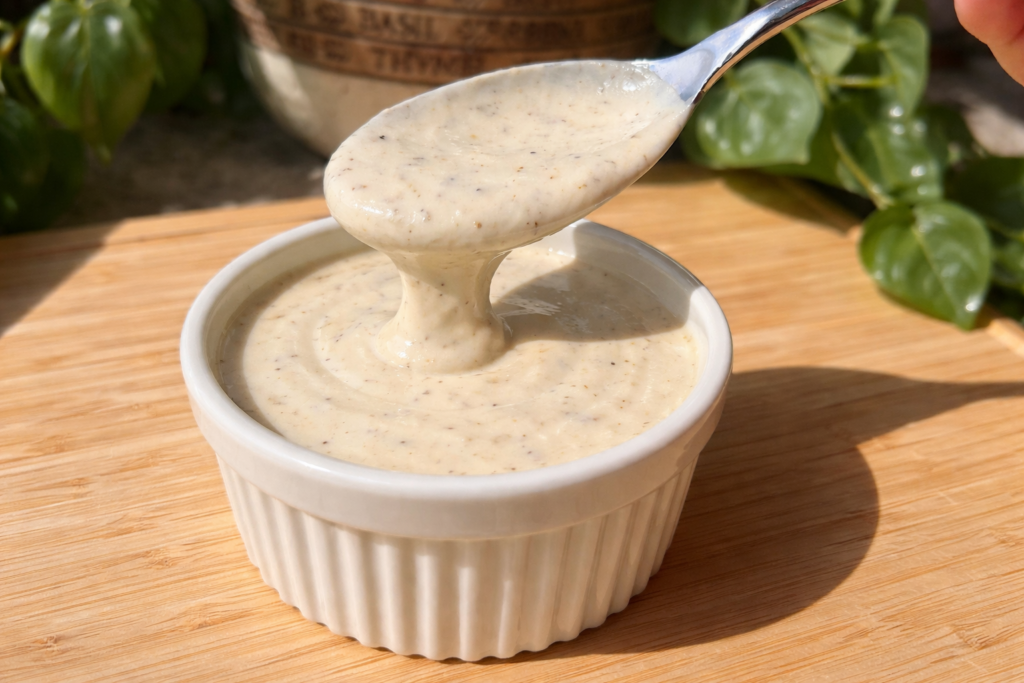
The Sauce That Shows Up in More Recipes Than You’d Expect
If you have made the loaded protein Alfredo sweet potato or the creamy French onion chicken bake on the blog, you have already met this sauce. It is the cream sauce both of those recipes are built around, and it is worth having its own post because once you make it, you will find reasons to use it constantly.
Traditional Alfredo sauce is butter, heavy cream, and Parmesan reduced until thick and rich. It tastes incredible and it has almost no protein and a lot of fat. This version gets you the same creamy, garlicky, cheesy result from a base of blended cottage cheese, bone broth, cream cheese, and Parmesan. Ten minutes, one blender, one pan. Twenty-four grams of protein per serving from a sauce that tastes like Alfredo because it basically is Alfredo, just rebuilt from the ground up.
The black pepper note in the original recipe says “lots” and that is correct. A generous amount of black pepper is part of what makes this taste like a real Alfredo rather than a thin cheese sauce. Do not be shy with it.
This sauce works over pasta, on the sweet potato, in the French onion bake, over roasted vegetables, or as a dip. Make a batch, keep it in the fridge, and use it through the week wherever you would normally reach for a cream sauce.
Why Blended Cottage Cheese Becomes Alfredo
The transformation that happens when cottage cheese gets blended smooth is the foundation of a lot of recipes on this blog, and this sauce is one of the clearest examples of why it works. Cottage cheese is mostly protein, water, and a small amount of fat. Blended completely smooth, the texture becomes creamy and pourable, closer to a thick cream than anything resembling cottage cheese.
Bone broth thins that blended base to a sauce consistency and adds depth that water never could. It is savory and slightly rich on its own, and combined with the cottage cheese it creates a base that has body and flavor before anything else is added.
Cream cheese is the ingredient that pushes this from a protein-rich cheese sauce toward something that actually tastes like Alfredo. Cream cheese has a tang and a richness that cottage cheese alone does not have, and a quarter cup is enough to round out the flavor without overwhelming the protein contribution from the cottage cheese. Low-fat cream cheese keeps this in check while still doing its job.
Garlic blended in raw with everything else means the flavor is distributed throughout the sauce rather than sitting as chunks. Two cloves blended completely smooth gives you garlic flavor in every spoonful without any garlic texture.
Parmesan goes in after blending, once the sauce is in the pan over heat. This is intentional. Parmesan melts and incorporates best with gentle heat and constant stirring. Blending it with everything else cold would not give you the same silky, melted integration. Adding it in the pan over medium-low heat lets it melt into the warm blended base and become part of the sauce rather than sitting as separate cheese.
Let’s Talk Ingredients
2 cups cottage cheese
The protein base of the entire sauce. Full-fat cottage cheese gives you the richest, creamiest result and is the recommendation here since this sauce is meant to taste indulgent. Low-fat works and keeps the calories down further but the sauce will be slightly less rich. Blend it completely smooth. There should be no curd texture remaining once it goes into the pan. This is non-negotiable for an Alfredo-style sauce. Any unblended texture will read as wrong against the smooth, glossy quality Alfredo is supposed to have.
1/2 cup bone broth
Thins the blended cottage cheese to a sauce consistency and adds savory depth. Chicken bone broth is the most neutral and works in almost any application this sauce gets used for. It also contributes a small amount of additional protein. If the sauce is too thick after blending and simmering, a little more bone broth loosens it back up. If it is too thin, simmer longer to reduce.
1/2 cup grated Parmesan cheese
Stirred in once the blended base is warm in the pan. Parmesan is the cheese that defines Alfredo flavor. Freshly grated melts more smoothly and has a sharper, more pronounced flavor than the shelf-stable shaker variety. Stir continuously as it melts in so it incorporates evenly rather than clumping. The Parmesan also helps thicken the sauce as it melts.
1/4 cup low-fat cream cheese
Goes into the blender with the cottage cheese, bone broth, and garlic. Cream cheese adds richness and a slight tang that pushes the flavor profile toward traditional Alfredo. Low-fat keeps the overall fat content reasonable while still contributing that characteristic creaminess. Let it soften at room temperature for a few minutes before blending so it incorporates smoothly without leaving small lumps.
2 cloves garlic
Blended in raw with the rest of the base ingredients. Two cloves gives you a clear, present garlic flavor throughout the sauce without being overpowering. Because it is blended completely smooth, there is no raw garlic texture or bite, just the flavor distributed evenly. If you want a milder, sweeter garlic flavor, roast the cloves first at 400 degrees for about 20 minutes before blending.
Black pepper, to taste (lots)
Not an exaggeration. A generous amount of black pepper is part of what makes this taste like Alfredo rather than a mild cheese sauce. Freshly cracked black pepper has more flavor than pre-ground. Add it generously while the sauce simmers and taste as you go. You should be able to see flecks of pepper throughout the finished sauce.
Salt, to taste
Season after the Parmesan has melted in, since Parmesan and bone broth both contribute saltiness. Taste before adding much salt. The sauce should be well-seasoned but not need a heavy hand once everything else is incorporated.
How to Use This Sauce Beyond the Two Recipes It Started In
This sauce was built for the loaded protein Alfredo sweet potato and the creamy French onion chicken bake, but limiting it to those two recipes would be a waste. Once you have a batch in the fridge, it becomes one of the more versatile things in your kitchen.
Over pasta is the most obvious use. Toss it with hot pasta and the sauce loosens slightly and coats every piece. Add grilled chicken, steamed broccoli, or sauteed mushrooms and you have a complete dinner that tastes like fettuccine Alfredo but carries a fraction of the usual fat and a meaningful amount of protein.
Over roasted vegetables, this sauce turns a simple side into something that feels finished. Roasted broccoli, cauliflower, or asparagus with a drizzle of this sauce and extra black pepper on top is a different experience than plain roasted vegetables.
As a dip, warmed and served alongside the low-carb pizza bites or with raw vegetables, it works in the same way a warm cheese dip would but with significantly more protein per serving.
For storage, this sauce keeps in the fridge for up to four days in an airtight container. It thickens as it cools, which is expected. To reheat, warm gently over low heat on the stovetop, stirring frequently, and add a small splash of bone broth or water if it needs loosening. Avoid microwaving at full power for long stretches since the cottage cheese base can separate slightly if it gets too hot too fast. Low and slow with stirring is the way to bring it back.
Make a double batch if you know you are going to use it across multiple recipes in a week. It scales easily, just double everything and use a larger pan for the simmering step so you have room to stir.