

The Baked Potato That Feels Like a Special Occasion
A baked potato is one of the most underrated vehicles for a great meal. It is filling, it is satisfying, and it takes almost no effort to make. The problem is that most baked potatoes end up as a side dish rather than the main event, loaded with sour cream and butter and cheese in a way that tastes good but does not do much for you nutritionally.
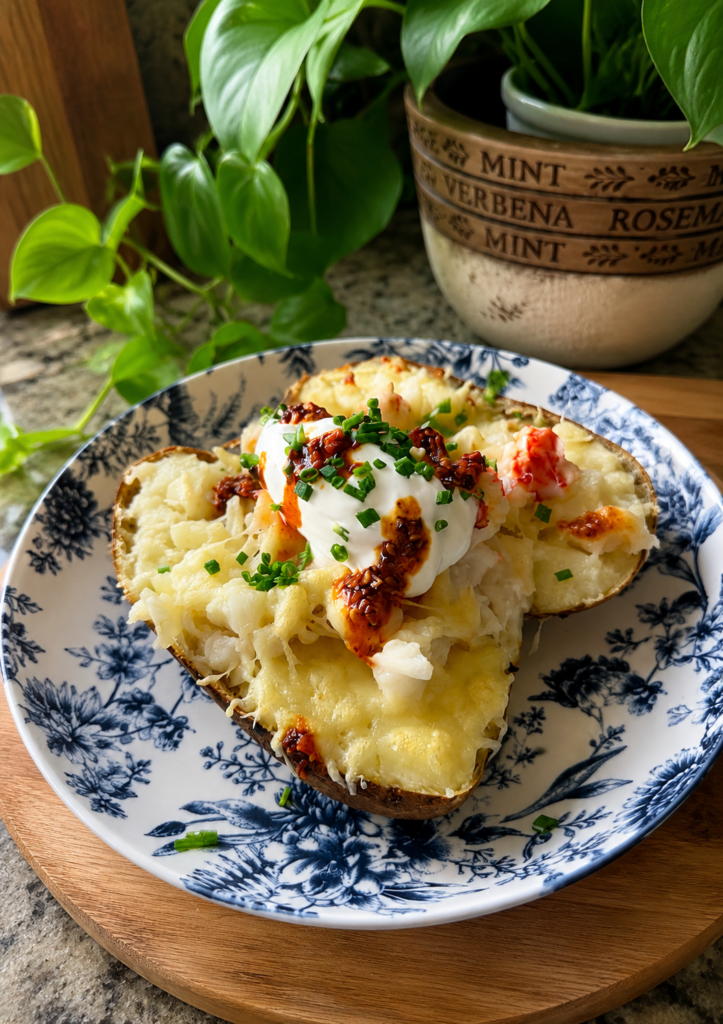
This version flips that. Lobster meat on top of a fluffy russet potato, covered in Parmesan, run under the broiler until the cheese is golden and bubbling, then finished with Greek yogurt instead of sour cream, chopped chives, and a drizzle of chili oil. It looks like something you would order at a steakhouse. It eats like a proper meal. And it has 35 grams of protein from a baked potato situation, which is not something most people expect.
The Greek yogurt is the swap that matters most here. It has the same cool, creamy, slightly tangy quality as sour cream and it adds protein instead of just fat. Combined with the lobster and Parmesan, it turns a plain baked potato into one of the more satisfying single-serving meals in this lineup.
If you have been looking for a recipe that feels indulgent without derailing anything, this is it. One potato. One hour. Worth every minute.
Lobster on a Weeknight — Why It Is More Practical Than It Sounds
Lobster sounds like a special occasion ingredient but it is more practical than people give it credit for when you are not dealing with the whole shell. Cooked lobster meat is available at most grocery stores, often in the seafood section as pre-cooked claw and knuckle meat or in the freezer aisle. It is already cooked so it needs nothing from you except chopping and warming slightly, which happens under the broiler on top of the potato.
Four ounces of cooked lobster meat is enough for a generous topping on one large potato. It does not need to be dressed or seasoned beyond what the Parmesan and chili oil bring. The sweetness of the lobster works naturally against the savory, slightly salty cheese and the heat of the chili oil. It is a combination that sounds fancy and is actually very simple.
The Parmesan goes on over the lobster and acts as a protective layer that gets golden and slightly crispy under the broiler while the lobster warms underneath. The broiler step is short, two to three minutes, but it is what makes the dish feel finished and restaurant-quality rather than just assembled.
Greek yogurt instead of sour cream is the nutritional upgrade that does not ask anything of you in terms of taste. Once it is dolloped on a hot potato next to chopped chives and chili oil, it is indistinguishable from sour cream in terms of what it adds to each bite. But it brings protein to a topping that traditionally brings only fat. That one swap is the entire logic of this recipe.
Let’s Talk Ingredients
1 large russet potato
The vessel for everything else and worth choosing carefully. A large russet gives you a fluffy, starchy interior that holds up under the lobster and cheese without becoming dense or gummy. Russets are the right potato for baking because of their high starch content and thick skin. Pierce it several times with a fork before baking so steam can escape. A potato that has not been pierced can split or burst in the oven. Bake at 400 degrees for 50 to 60 minutes until completely tender when pierced with a knife.
1 tsp butter (optional)
Added to the fluffed potato before the toppings go on. A small amount adds richness and helps the inside of the potato taste complete rather than plain. It is genuinely optional here because the Greek yogurt and Parmesan bring their own richness. If you are skipping it to keep the calories lower, the potato still works without it. If you include it, one teaspoon is enough. You are not making a traditional loaded potato.
4 oz cooked lobster meat, chopped
The star topping. Pre-cooked lobster meat from the grocery store seafood counter or freezer section is the convenient option. Claw and knuckle meat has the best texture for this application since it chops cleanly into pieces. Tail meat is also excellent and has a firmer texture. Whatever you use, chop it into generous chunks rather than fine pieces so it has presence on the potato. It goes on before the Parmesan and warms under the broiler in the two to three minutes the cheese takes to melt.
2 tbsp grated Parmesan cheese
Sprinkled over the lobster before the broiler. It melts and gets slightly golden and creates a thin, savory crust over the lobster that protects it while it warms and adds a salty, nutty flavor layer. Freshly grated Parmesan is better here than the shelf-stable variety. It melts more evenly and tastes sharper and more present. Two tablespoons is the right amount for a single potato. Enough to cover the lobster and brown at the edges without overwhelming everything.
2 tbsp plain nonfat Greek yogurt
The high-protein sour cream substitute. Goes on after the broiler, not before. Nonfat Greek yogurt has the same tangy, creamy quality as sour cream and adds protein instead of just fat. Full-fat Greek yogurt also works and is slightly richer. A generous dollop on the hot potato melts slightly and mingles with the chives and chili oil in a way that is genuinely satisfying. This is the swap that makes the macro profile of this potato what it is.
1 tbsp chopped chives
Scattered over the finished potato. Chives add a mild onion flavor, freshness, and color. They are a classic baked potato topping for good reason. Fresh chives specifically rather than dried. The freeze-dried variety does not have the same freshness or visual appeal. If you do not have chives, thinly sliced green onions work as a substitute.
1 to 2 tsp chili oil
The finishing drizzle that ties everything together. Chili oil adds heat, richness, and a depth that the other toppings do not have. It is the element that makes this feel like something specific rather than just a potato with lobster on it. The same chili oil that appears throughout the blog. Start with one teaspoon and add more depending on heat tolerance. Drizzle it over everything at the very end right before serving.
One Potato, One Meal, No Shortcuts That Matter
This is a single-serving recipe by design. It is a meal for one that feels worth making because the result is genuinely good. The baked potato takes 50 to 60 minutes but almost none of that time is active. Pierce it, put it in the oven, and walk away. While it bakes you can prep anything else you need, and the actual assembly once the potato comes out takes about five minutes.
For the broiler step, move the oven rack to the top position before turning the broiler on. Two to three minutes is enough time to melt the Parmesan and warm the lobster. Stay close. The broiler works fast and the difference between golden and burnt is about 60 seconds. Pull it the moment the cheese is bubbly and starting to color.
If you want to make this for two people, just make two potatoes and double the toppings. The bake time stays the same. The broiler step may need an extra minute since you have more mass on the baking sheet.
The components also work as a meal prep situation with some planning. Bake several potatoes at once and store them in the fridge for up to four days. When you are ready to eat, microwave a potato for two minutes until warm, add the toppings, and broil. The lobster can also be prepped and stored in a small container in the fridge for a couple of days so assembly on a busy night is genuinely fast.
Skip the butter if you are keeping the calories tight. The recipe is labeled as optional for a reason. The Greek yogurt, lobster, and Parmesan bring enough richness that the butter does not dramatically change the eating experience if it is not there.