

The Bake That Tastes Like French Onion Soup Became Dinner
French onion soup is one of those things people order at restaurants and never think to make at home because it seems like a production. The caramelized onions alone take 20 minutes of patience before anything else happens. But when the payoff is a rich, deeply savory dish with melted cheese and sweet golden onions, that 20 minutes is absolutely worth it.
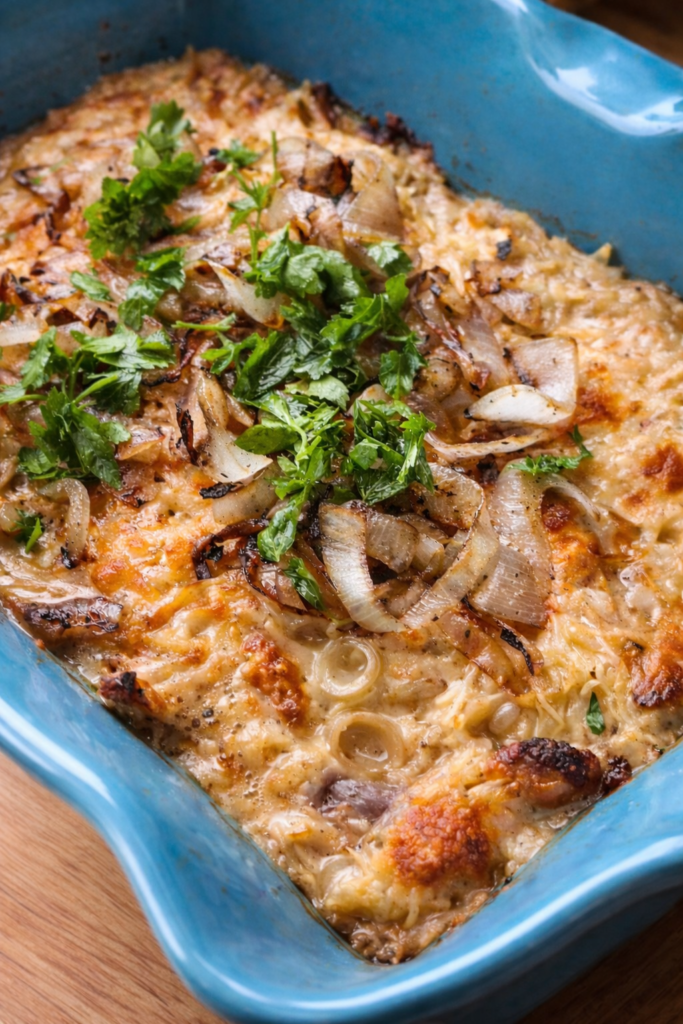
This recipe takes everything that makes French onion soup worth ordering and turns it into a complete one-dish dinner. Caramelized onions, garlic, thyme, shredded chicken, orzo, a blended cottage cheese cream sauce, chicken broth, mozzarella, and Parmesan. Everything goes into a baking dish and comes out 25 to 30 minutes later as a creamy, bubbly, golden-topped bake that tastes like it took significantly more effort than it did.
The high-protein cream sauce is the version of this dish that makes sense for the way we eat around here. Blended cottage cheese and bone broth replace the heavy cream that a traditional French onion bake would call for. The texture is indistinguishable from a cream-based sauce once it is combined with the rest of the ingredients and baked. The protein numbers tell a different story though. Thirty to thirty-five grams per serving from a pasta bake is not something you see often.
This feeds four to six people, holds up well in the fridge, and reheats without losing its texture. It is a Sunday dinner that becomes a Monday lunch without any extra work.
The Onions Are the Whole Point
There is no shortcut for caramelized onions and this recipe does not pretend otherwise. Twenty minutes over medium heat, stirring occasionally, until two large yellow onions go from sharp and raw to soft, deeply golden, and sweet. That transformation is what gives this dish its flavor foundation and what makes it taste like French onion soup rather than just chicken and pasta.
The salt added at the start of the onion cooking process draws out moisture and accelerates the caramelization. Butter and olive oil together give you the richness of butter with the higher smoke point of oil, which means you can cook the onions for longer without burning. Do not rush this step by turning up the heat. High heat caramelizes the outside of the onion pieces while leaving the inside sharp and raw. Low and slow is the only way.
Garlic and thyme go in after the onions are done and cook for just a minute or two until fragrant. They add layers on top of the already deep onion flavor. The thyme specifically is what gives the dish its French onion character. It is a subtle herb that works in the background but is noticeably absent when it is not there.
The blended cottage cheese sauce gets combined with everything in the pan before it goes into the baking dish. The dry orzo goes in last and gets stirred through so it is evenly distributed. During baking the orzo absorbs the chicken broth and the cottage cheese sauce and becomes tender and starchy in a way that thickens the whole bake and gives it body. The mozzarella on top melts and browns and creates the golden, bubbly crust that makes this worth making.
Let’s Talk Ingredients
2 tbsp unsalted butter
One of the two fats used to caramelize the onions. Butter adds richness and flavor to the onions as they cook. Unsalted gives you control over the salt level since the dish already has salt added to the onions and seasoning throughout. The butter will brown slightly over 20 minutes of cooking, which adds a nutty depth to the onion base.
1 tbsp olive oil
Combined with the butter for the onion caramelization. Olive oil raises the smoke point so the butter does not burn during the long cook time. Together they create a richer cooking fat than either one alone. The olive oil flavor is subtle after 20 minutes of cooking with onions and does not compete with the French onion profile of the dish.
2 large yellow onions, thinly sliced
The star of this recipe. Yellow onions are the right choice for caramelization because they have the right sugar content and flavor profile. White onions work but are sharper and less sweet when caramelized. Red onions give you a different flavor and color. Thinly sliced means they will cook through evenly and caramelize uniformly. Use a mandoline or a sharp knife and slice as consistently as possible. Two large onions seems like a lot raw but they reduce to a fraction of their original volume after 20 minutes.
1/2 tsp salt
Added to the onions at the start of cooking. Salt draws moisture out of the onion slices and accelerates the softening process. It also seasons the onions as they cook so the caramelization layer has flavor built in. Do not skip this step or add the salt later. It needs to go in with the onions from the beginning.
3 garlic cloves, minced
Added after the onions are caramelized. Garlic cooked for one to two minutes in the onion fat becomes fragrant and slightly sweet without becoming sharp or bitter. Mince it finely so it distributes evenly throughout the dish. Three cloves for this amount of food is the right ratio. You want garlic present but not dominant.
1 1/2 cups orzo pasta, dry
Goes into the baking dish dry and cooks in the oven by absorbing the chicken broth and cottage cheese sauce during the 25 to 30 minute bake time. This is the same technique used in one-pan orzo dishes and it works because the orzo releases starch as it cooks, which naturally thickens the sauce around it. The result is a pasta bake that is creamy and cohesive rather than loose and soupy. Make sure the dry orzo is evenly distributed before it goes in the oven so it cooks uniformly.
2 cups cooked shredded chicken
The protein component. Rotisserie chicken is the most convenient option and adds its own seasoning to the dish. Shred it into bite-sized pieces so it distributes evenly through the bake and every forkful has a good ratio of chicken to pasta. Poached or baked chicken breast or thighs work too. Thighs stay juicier through the bake time and are worth using if you are cooking your own chicken specifically for this recipe.
1/2 tsp dried thyme
The herb that gives this dish its French onion identity. Thyme is earthy and slightly floral and pairs naturally with caramelized onions and beef or chicken. Dried thyme is fine here since it gets cooked into the dish. If you have fresh thyme, use about one and a half teaspoons of fresh leaves instead.
1/4 tsp black pepper
Background seasoning that balances the salt and the sweetness of the caramelized onions. Add it when the garlic and thyme go in. A quarter teaspoon is subtle. If you prefer more pepper presence, double it.
2 cups low-sodium chicken broth
The liquid the orzo cooks in during baking. Low-sodium is important here because the dish already has salt from the onions, the cheeses, and the cottage cheese sauce. Regular broth can make the finished dish too salty. The broth also adds savory depth to the sauce as it combines with the cottage cheese and cheese during baking.
1 1/2 cups shredded mozzarella
Most goes into the dish before baking, a small amount is reserved for the top. Mozzarella melts smoothly and creates a creamy, pull-apart texture throughout the bake. It also browns beautifully on top. Freshly shredded melts better than pre-shredded. Low-moisture mozzarella is better for baking than fresh mozzarella, which releases too much water.
1/2 cup grated Parmesan
Stirred into the dish before baking. Parmesan adds a sharp, salty, nutty flavor that mozzarella alone does not have. It also helps thicken the sauce slightly as it melts. Freshly grated gives you the best flavor and melting quality. The shelf-stable grated Parmesan works but the flavor is noticeably less sharp.
1 cup low-fat cottage cheese
The base of the high-protein cream sauce. Blended smooth with the bone broth, it becomes a creamy, pourable sauce that behaves like a cream sauce in the bake without the heavy cream calories. Low-fat cottage cheese works well here because the mozzarella and Parmesan provide enough fat and richness. Full-fat is also fine and gives a slightly richer result.
1/2 cup bone broth
Blended with the cottage cheese to create the cream sauce. Bone broth adds depth and protein and thins the cottage cheese to a pourable consistency. Chicken bone broth is the most neutral choice. The sauce should be smooth and creamy after blending with no visible curd texture remaining.
One Dish, Done by Sunday Night
This is the kind of recipe that was designed for a Sunday cook. The caramelized onions take 20 minutes of attention, the rest of the assembly takes about 10 minutes, and then the oven handles everything else for 25 to 30 minutes. By the time it comes out golden and bubbling you have a complete dinner with very little active effort.
For meal prep, this holds up in the fridge for up to four days. The orzo continues to absorb the sauce as it sits, which makes the leftovers slightly denser than the freshly baked version. To reheat, add a small splash of chicken broth to the container before microwaving to loosen the sauce back to its original consistency. Cover loosely so moisture stays in. Individual portions reheat in about two to three minutes.
You can also assemble this ahead without baking. Caramelize the onions, combine everything, pour into the baking dish, cover tightly, and refrigerate for up to 24 hours. Pull it from the fridge while the oven preheats and add about five extra minutes to the bake time since it is starting cold. The result is the same as baking immediately.
The extra caramelized onions and fresh parsley on top at the end are not just for looks. The fresh onions add another layer of that sweet, savory caramelized flavor on top of the baked dish. The parsley adds brightness that cuts through the richness of the cheese and sauce. Both are worth doing.
This also scales well for a larger group. Double the recipe and use a large baking dish or two standard ones. The bake time stays roughly the same since the depth of the dish does not change significantly. This is a crowd-pleasing dish that disappears fast at a gathering.