


The Recipe That Has Been on the Table for Years
Meatloaf has a reputation problem. Most people’s mental image of it is a dense, dry brick of ground beef covered in ketchup glaze sitting in a loaf pan. That version exists and it is not what this is.
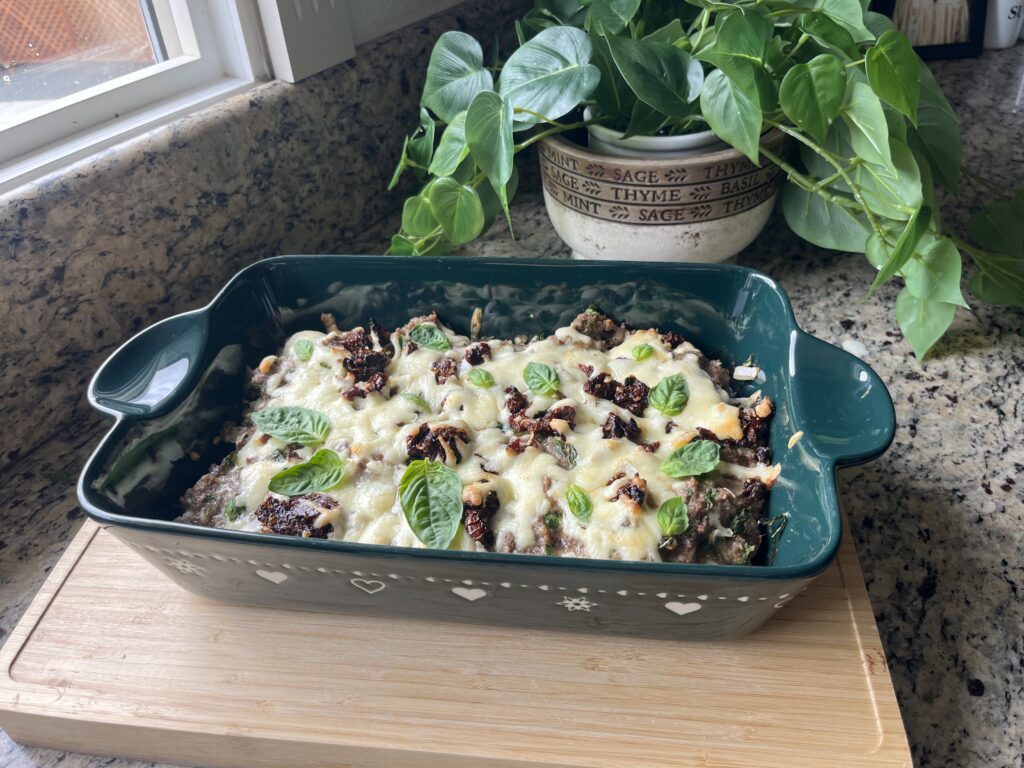
This is a stuffed meatloaf. Ground beef and sausage combined into a meat mixture seasoned with garlic, onion, fresh parsley, and red wine, then layered in a baking dish with sun-dried tomatoes, fresh basil, and Monterey Jack cheese in the middle and again on top. It bakes for an hour and comes out with a melted cheese and tomato layer running through the center and a golden, cheesy top that makes every slice look like something worth plating properly.
This is the kind of recipe that gets passed down. The kind of thing that smells like Sunday dinner while it is in the oven and tastes like more effort went into it than it actually required. The active prep time is about 20 minutes. The oven does everything else.
Thirty-eight grams of protein per serving. Feeds six. The kind of meal that covers dinner tonight and lunch tomorrow without any additional work.
What Happens When You Layer a Meatloaf
Standard meatloaf is mixed and shaped and baked as one uniform thing. The texture is consistent throughout and the flavor depends entirely on what went into the mix. Stuffed meatloaf is a different thing. The layering creates distinct pockets of flavor inside the meat that you hit at different points as you eat through a slice.
Sun-dried tomatoes bring a concentrated, intensely savory sweetness that fresh tomatoes cannot replicate. They have been dried and sometimes packed in oil, which concentrates their flavor significantly. Layered through the center of the meatloaf they hold their character through an hour of baking and add a depth that elevates the whole dish without being identifiable in every bite.
Fresh basil in the middle layer adds a herby brightness that cuts through the richness of the beef and cheese. It wilts and softens during baking but its flavor remains and contrasts against the savory meat. The combination of sun-dried tomato, basil, and Monterey Jack in the center is essentially a caprese running through the middle of a meatloaf, which sounds unlikely and tastes exactly as good as it should.
The sausage in the meat mixture is doing more than just adding bulk. It adds fat, seasoning, and a slightly different texture than straight ground beef. The ratio of one pound of each creates a mixture that is richer and more flavorful than all-beef meatloaf without being as heavy as all-sausage. The red wine in the mix adds moisture and a subtle depth that keeps the meatloaf from drying out during the long bake.
Resting before slicing is not optional. Ten minutes of resting after the meatloaf comes out of the oven allows the juices to redistribute through the meat rather than running out immediately when you cut into it. A meatloaf sliced straight from the oven will be wet on the plate and dry in the slice. Rested properly it holds together cleanly and stays moist.
Let’s Talk Ingredients
1 lb ground beef
The main protein base. An 80/20 blend gives you enough fat to keep the meatloaf moist through an hour of baking without being greasy. Leaner beef dries out faster and needs more help from the other ingredients to stay tender. The fat from the ground beef renders during baking and bastes the meat from the inside. Do not use extra lean beef here.
1 lb sausage
Combined with the ground beef for a richer, more complex meat mixture. Italian sausage, whether sweet or hot, is the most natural pairing given the sun-dried tomato and basil filling. It is already seasoned with fennel, garlic, and herbs, which means it contributes flavor to the mixture without any additional seasoning. Remove the casings if using link sausage before mixing. Ground sausage in bulk form is easier to work with.
1/2 onion, finely chopped
Adds savory sweetness and moisture to the meat mixture. Finely chopped so it distributes evenly and does not create large chunks in the texture of the finished meatloaf. It will soften completely during baking. If you want an even milder onion presence, grate it on a box grater instead of chopping. Grated onion incorporates into the meat almost invisibly.
1 cup breadcrumbs
The binder that holds the meatloaf together and keeps the texture from being too dense. Breadcrumbs absorb moisture from the eggs and wine and swell slightly during baking, which creates a more tender, cohesive texture. Plain or Italian-seasoned breadcrumbs both work. Italian-seasoned adds a little extra herb flavor to the base. If you want to reduce the carbs, use almond flour at the same quantity or pork rind crumbs pulsed fine.
1 tbsp garlic, minced
Adds savory depth to the meat mixture. Mince it finely so it distributes evenly. Fresh garlic is noticeably better here than garlic powder. It roasts in the meat during the hour-long bake and becomes sweet and mellow rather than sharp. A full tablespoon for two pounds of meat is the right ratio.
2 eggs
Bind the meat mixture together. Without eggs the meatloaf will crumble when sliced rather than holding its shape. Two eggs for two pounds of meat is the standard ratio. Whisk them lightly before adding to the mix so they incorporate evenly without overmixing the meat.
3 tbsp fresh parsley, chopped
Goes into the meat mixture and adds a fresh, herby note to the base. Fresh parsley has a clean, slightly grassy flavor that works in the background of the meat without competing with the more intense filling ingredients. Dried parsley is a weaker substitute in something that bakes for an hour. Use fresh.
1/3 cup red wine
Adds moisture and a subtle depth of flavor to the meat mixture. The alcohol cooks off completely during baking and what remains is a slight richness and complexity that you would not get from water or broth. Use a wine you would drink. It does not need to be expensive but it should not be something you would pour down the drain. A simple Cabernet Sauvignon or Merlot works well.
1 cup Monterey Jack cheese, shredded
Half goes in the middle layer, half goes on top. Monterey Jack melts smoothly and has a mild, slightly buttery flavor that does not compete with the sun-dried tomatoes and basil. It creates a pull-apart melted layer in the center and a golden, bubbly topping. Freshly shredded melts better than pre-shredded. A pepper Jack blend adds heat if your household is into that.
1 jar sun-dried tomatoes, chopped
The flavor anchor of the filling. Sun-dried tomatoes are intensely concentrated in flavor and have a chewy, dense texture that holds up through a long bake. Oil-packed sun-dried tomatoes are more pliable and easier to chop than dry-packed. Drain the oil before using. Chop them into small pieces so they distribute evenly through both filling layers.
1 cup fresh basil, chopped
The herby brightness in the filling. A full cup sounds like a lot but it wilts significantly during baking. Chop it roughly rather than finely so it retains some visible presence in the layers. The combination of basil with the sun-dried tomatoes and Monterey Jack in the filling is what gives this meatloaf its character. Do not substitute dried basil. The flavor of dried basil after an hour in the oven is not the same thing at all.
Why This Is the Meatloaf Worth Making on a Sunday
Meatloaf is inherently a make-ahead-friendly dish and this stuffed version is no exception. It actually benefits from being made a day ahead because the flavors settle and deepen overnight in the fridge. The slices also hold together better when the meatloaf has been fully chilled and then reheated rather than sliced fresh from the oven.
Make it on Sunday and you have a protein-dense, flavorful meal that requires nothing from you on a Monday or Tuesday except reheating. Slice it cold from the fridge and warm individual slices in a skillet over medium heat for about three minutes per side, or wrap in foil and warm in a 325 degree oven for 15 minutes. Either method keeps the moisture in better than the microwave, which tends to dry out the edges.
For meal prep, slice the entire meatloaf after resting, portion into containers, and refrigerate for up to four days or freeze for up to two months. Individual slices freeze and reheat well. Thaw overnight in the fridge and reheat as above.
This also feeds a crowd without any scaling difficulty. The recipe makes six generous servings. For a larger group, make two loaves in separate baking dishes rather than trying to scale the recipe into one larger dish. Two loaves bake in the same time and are easier to manage than one oversized meatloaf.
Pairing options are flexible. Mashed cauliflower is the natural low-carb side. Roasted vegetables, a simple green salad, or steamed green beans all work. For a more traditional spread, mashe