

The Salad That Actually Eats Like a Meal
Most salads fall into one of two categories. Either they are so light that you are hungry again an hour later, or they are so loaded with heavy dressing and toppings that they stop feeling like a salad and start feeling like a chore. This one sits in neither of those places.
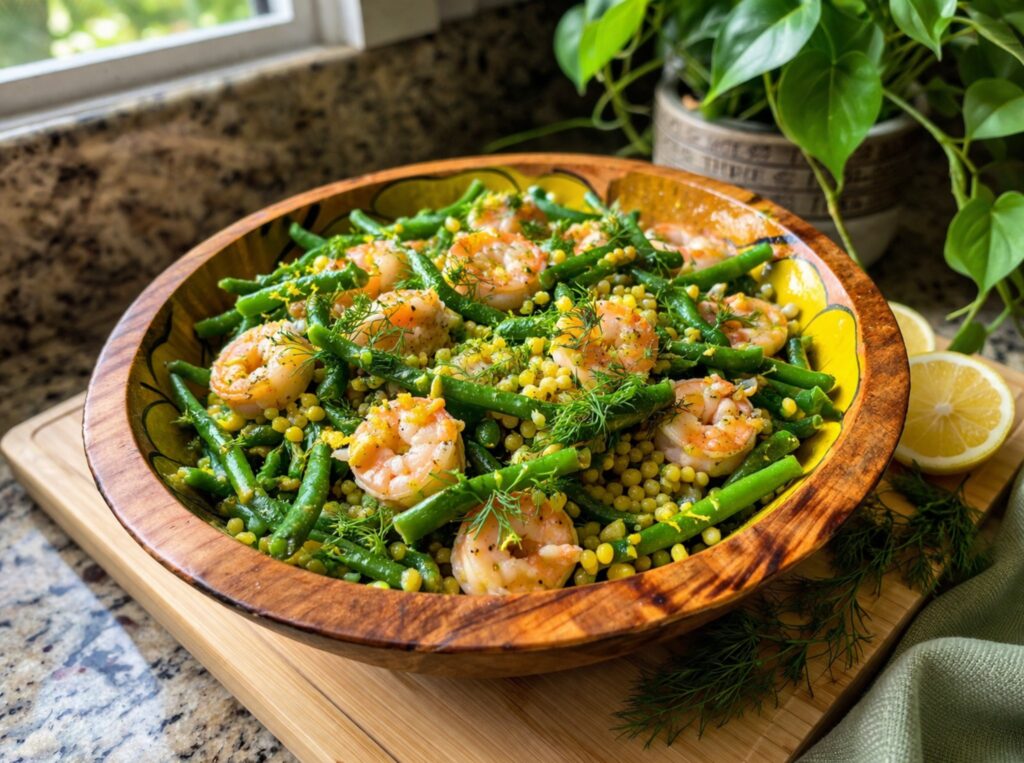
Shrimp, green beans, and pearl couscous tossed in a lemon dill vinaigrette. That is the whole thing. The shrimp brings 32 grams of protein per serving. The green beans add crunch and fiber. The pearl couscous gives you enough substance that you actually feel full. And the dressing is bright and herby and makes everything taste like something you would order at a restaurant rather than something you threw together on a Wednesday.
It takes 30 minutes. It holds up in the fridge for three days. It is genuinely one of those recipes that gets better as it sits, which means the version you eat on day two is better than the version you ate when you made it. That is a rare quality in a salad and it is worth something when you are meal prepping for the week.
This works as a lunch, a light dinner, a side dish at a cookout, or a meal prep staple. It is flexible enough to fit into a lot of different situations and consistent enough that once you make it, you understand immediately why it goes on repeat.
Why This Recipe Works
Pearl couscous is the right call here and it is worth understanding why. Regular couscous is light and fluffy and absorbs dressing quickly, sometimes to the point of getting mushy as it sits. Pearl couscous, also called Israeli couscous, is larger and has a chewy texture that holds up much better in a dressed salad. It soaks up the vinaigrette without falling apart, and by day two it has absorbed even more flavor without losing its bite. For a meal prep salad, that distinction matters.
Blanching the green beans instead of roasting or skipping them altogether is what keeps the salad feeling fresh. Two to three minutes in boiling salted water followed by an immediate ice bath gives you green beans that are bright green, tender but still crisp, and full of flavor. Overcooked green beans go dull and soft and change the texture of the whole salad. The ice bath stops the cooking instantly and keeps the color. Do not skip it.
The vinaigrette uses both olive oil and avocado oil, which gives it a slightly richer body than a single-oil dressing. Rice wine vinegar and fresh lemon juice together create a brightness that is sharp but not harsh. Dijon mustard emulsifies the dressing so it stays cohesive and clings to the couscous and shrimp rather than pooling at the bottom of the bowl. Fresh dill is non-negotiable. Dried dill in a vinaigrette tastes dusty compared to fresh.
The shrimp cook in about five minutes and they need to be slightly cooled before going into the salad. Hot shrimp will wilt the green beans and warm the couscous, which changes the texture of everything. Let them rest for a few minutes off the heat before assembling.
Let’s Talk Ingredients
1 cup pearl couscous, dry
Pearl couscous cooks like pasta, in boiling salted water, and takes about 8 to 10 minutes until tender with a slight chew. Drain and rinse with cold water to stop the cooking and cool it down before combining with the other ingredients. Do not skip rinsing. Warm couscous going into a cold salad will wilt everything and make the dressing separate. Let it cool completely before assembling.
1 lb shrimp, peeled and deveined
The main protein. Medium to large shrimp work best here. Too small and they get lost in the salad. Frozen shrimp is completely fine and often fresher than what is behind the fish counter since it is frozen on the boat. Thaw overnight in the fridge or under cold running water. Pat them dry before cooking so they sear rather than steam in the pan. Season simply with salt and pepper. The dressing brings enough flavor that the shrimp do not need much else.
2 cups fresh green beans, trimmed
Fresh green beans are worth seeking out for this recipe. Frozen green beans release more moisture and do not hold up as well after blanching. Trim the stem ends and cut them into bite-sized pieces if they are long, about 2-inch lengths, so they are easy to eat with the couscous and shrimp. Blanch in well-salted boiling water for 2 to 3 minutes, then transfer immediately to ice water. Dry them thoroughly before adding to the salad or they will water down the dressing.
1 to 2 tbsp olive oil (for cooking shrimp)
Just enough to coat the pan. Medium heat is right for shrimp. Too high and the outside overcooks before the inside is done. Too low and they steam instead of sear. Two to three minutes per side for medium shrimp until they are pink and slightly golden at the edges. Pull them off the heat as soon as they are cooked through. Overcooked shrimp get rubbery fast and do not recover.
1/4 cup olive oil (for vinaigrette)
One of the two oils in the dressing. Olive oil brings flavor and a slight fruitiness that works with the lemon and dill. Use a good extra virgin olive oil here since the dressing is not being cooked and the flavor comes through directly.
1/4 cup avocado oil (for vinaigrette)
The second oil. Avocado oil is more neutral in flavor than olive oil and has a slightly silkier texture. Using both oils gives the dressing a more complex body than using one alone. If you only have olive oil, use the full half cup of that instead. The dressing will be slightly more olive-forward but still works.
2 tbsp rice wine vinegar
Brings mild acidity to the dressing without being sharp or harsh. Rice wine vinegar is gentler than white wine vinegar or apple cider vinegar, which makes it easier to balance in a dressing where the lemon juice is already providing brightness. If you do not have it, white wine vinegar is the closest substitute. Use slightly less since it is sharper.
2 tbsp fresh lemon juice
Fresh squeezed, not bottled. The brightness of fresh lemon juice is noticeably different from bottled and in a dressing where lemon is one of the main flavor notes, it matters. One medium lemon gives you roughly two tablespoons of juice. Zest the lemon before juicing and add a little zest to the dressing if you want a more pronounced lemon flavor.
1 tsp Dijon mustard
Emulsifies the dressing so it stays combined rather than separating into oil and acid. It also adds a subtle sharpness that rounds out the lemon and vinegar. Do not swap for yellow mustard. The flavor is too strong and sweet and will pull the dressing in the wrong direction.
1 to 2 cloves garlic, minced
Adds savory depth to the vinaigrette. One clove is mild and background. Two cloves is more noticeable. Mince it finely so it distributes evenly. If you want the garlic flavor without any raw garlic sharpness, let the minced garlic sit in the lemon juice for a few minutes before combining with the other dressing ingredients. The acid mellows it slightly.
1/2 cup fresh dill, chopped
This is a lot of dill and it is correct. Fresh dill is the dominant herb flavor in this salad and it needs to be present in every bite. Chop it roughly and add half to the dressing and half to the salad at assembly if you want it to be more visible. Dried dill is not a substitute in this recipe. The flavor does not translate the same way in a cold vinaigrette.
Salt and pepper
Season the shrimp before cooking, salt the blanching water generously, season the dressing, and then taste the assembled salad and adjust again. Every component needs to be seasoned on its own before it goes together. An underseasoned salad where everything is otherwise correct is still a flat salad.
Why This Salad Gets Better Overnight
Most dressed salads are at their best immediately and decline from there. This one is the exception. Pearl couscous is absorbent enough to soak up the vinaigrette as it sits, which means the grains themselves become seasoned and flavorful rather than just coated on the outside. By the next day the couscous tastes like it was cooked in the dressing rather than just tossed with it.
The green beans stay crisp for a couple of days as long as they were properly dried after blanching. Moisture is the enemy of a dressed salad in the fridge. If the green beans went in wet, they will have watered down the dressing and softened faster. Dry them well before they go in and they hold their texture.
The shrimp are fine for two to three days in the fridge. They will firm up slightly as they chill but the texture remains good. If you are making this specifically for meal prep and want the shrimp to stay at their best, you can keep them separate and add them at serving time. That is extra work but it is an option.
For meal prep, portion into four containers immediately after assembling. The dressing distributes more evenly if you toss the salad thoroughly before portioning rather than portioning and adding dressing to each container separately. Give each container a quick stir before eating since the dressing settles at the bottom as it sits.
If you want to add feta or avocado, do that at serving time rather than when you assemble. Feta gets a little intense after a day or two in the dressing and avocado browns quickly. Both are better as a fresh addition when you are ready to eat.