

Salmon is one of those things that sounds fancier than it is. It looks impressive, it tastes incredible, and it takes less than 20 minutes in the oven. If you have been intimidated by it, I want you to let that go right now.
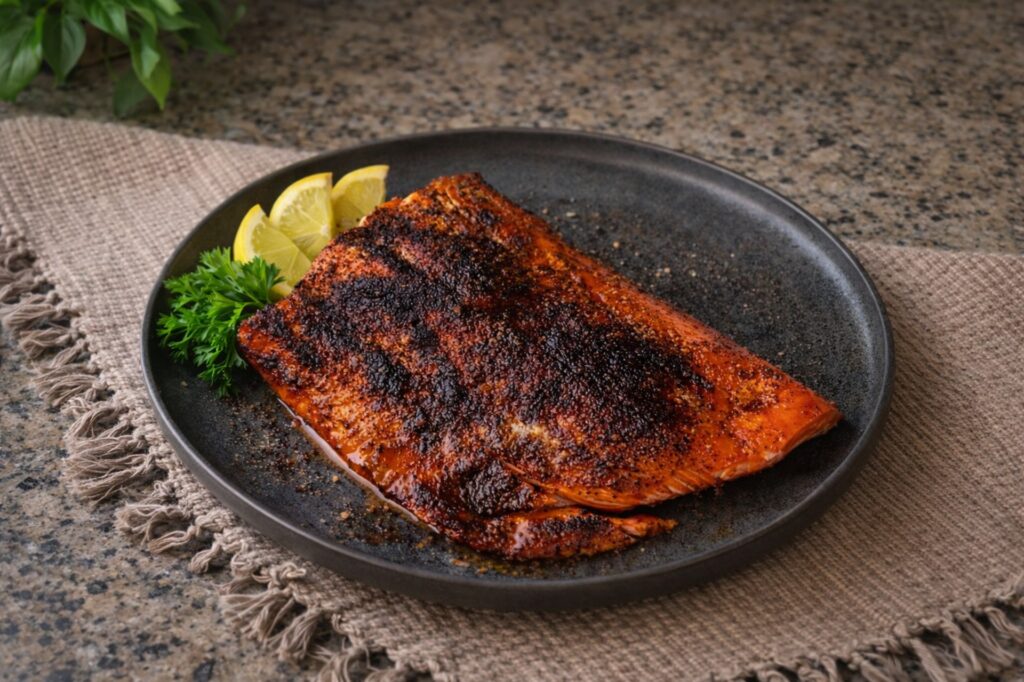
This is the salmon recipe I keep coming back to. Honey, cayenne, paprika, cumin. That is it. The glaze caramelizes in the oven and turns into something that tastes like you actually tried. You did not have to try very hard. That is the point.
It works on a Tuesday when you have nothing left in you and it works on a Friday when you want dinner to feel like a little bit of an occasion. Pair it with rice, roasted veggies, a simple salad, whatever you have going. It is flexible in the best way.
If you have been stuck making the same few dinners on rotation and feeling like you need something that actually tastes good without blowing your macros, this is going to become a staple.
And if you are feeding a family, good news: the spice level is easy to adjust. This recipe is not aggressively spicy. It is warm and flavorful. Most kids will eat it. If you have a heat-sensitive crowd, you can dial back the cayenne or skip it entirely the first time and see how it lands.
Why This Recipe Work
The combination of honey and spice is doing a lot here, and it is worth understanding why so you do not mess with it.
Honey is not just for sweetness. When it hits a hot oven, it caramelizes. It creates a sticky, slightly glossy layer on top of the salmon that locks in moisture and gives you those slightly crisp edges without drying the fish out. If you have ever made baked salmon before and ended up with something chalky and dry, no glaze was probably the problem.
Cayenne is the thing that makes this feel like a real recipe instead of just fish in the oven. It does not make it spicy exactly. It adds warmth and depth, a little bit of heat that balances the sweetness of the honey. Without it, the glaze tastes flat.
Paprika and cumin are there for smokiness and earthiness. They round out the flavor so it does not just taste sweet and hot. It tastes complex. Like something a good restaurant would charge you too much for.
And the broil at the end is optional but worth doing if you have two extra minutes. It pushes the glaze from baked into caramelized, and that is where the magic is.
Let’s Talk Ingredients
Salmon Fillet(s)
You can use one large fillet or individual portions. Both work. The cooking time is based on a standard fillet that is roughly an inch thick at the thickest part. If yours is thinner, check it at 14 minutes. If it is thicker, it might need a minute or two more. You want it flaky and opaque all the way through, not translucent in the center.
Skin-on or skinless both work here. Skin-on actually helps protect the bottom of the fish from the heat. If you are not sure, leave the skin on and just do not eat it. It peels right off after baking.
Fresh or thawed from frozen both work. If you are using frozen, make sure it is fully thawed and patted dry before it goes in the oven. Extra moisture on the surface will steam the fish instead of letting the glaze do its job.
Honey
Regular honey, whatever you have. It does not need to be fancy. The honey thins out slightly when you brush or drizzle it on and then caramelizes in the oven. A little goes a long way. You are coating the top of the fish, not drowning it.
If you want to add a tiny bit more depth, a squeeze of fresh orange juice stirred into the honey before brushing it on works really well. Not necessary, just a good variation to know about.
Cayenne Pepper
This is the ingredient people sometimes skip because they are nervous about heat, and I get it. But please do not skip it. The amount you are using is not going to make this mouth-burning spicy. It is going to make it interesting. Start with a small pinch if you are heat-sensitive, but put it in.
Paprika
Regular paprika works fine. Smoked paprika is also excellent here and adds a little more depth if you have it. Either one gives the glaze that warm reddish color and a mild smokiness that plays really well with the honey.
Cumin
Cumin is earthy and warm. It is what keeps this from tasting like just honey-glazed fish and makes it taste more like something with actual character. A small amount is all you need. It works in the background.
Salt and Black Pepper
Season the fish well. Salmon can handle salt. Under-seasoned salmon is bland regardless of what glaze you put on it, so do not be shy. A good even sprinkle of both over the top, on top of the spice layer, is what you want.
Make-Ahead, Storage, and Leftover Ideas
Baked salmon reheats better than most people think, but there is one trick to it. Do not microwave it. The microwave makes salmon smell terrible and turns the texture rubbery. Reheat it in a low oven, around 275 to 300 degrees, for about 10 minutes. It comes out close to freshly baked.
If you do not want to reheat it at all, cold leftover salmon is genuinely great. Flake it over a salad. Tuck it into a wrap with greens and a little lemon. Stir it into eggs in the morning. Leftover salmon is one of those things that earns its keep in the fridge in ways a lot of proteins do not.
You can also prep the salmon ahead of time. Get your fillet on the parchment-lined sheet, mix your spices, and keep them separate in a small bowl. Right before dinner, drizzle the honey, sprinkle the spices, and it goes straight into the oven. The whole thing is in your hands for under five minutes of active work.
Leftovers keep well for two days in the fridge in an airtight container. After that the texture starts to go. Eat it within two days and you are good.
One more thing worth knowing: this recipe works for meal prep. Make two fillets, eat one for dinner, and use the second throughout the week. High protein, good fats, works with almost everything. It is a smart piece of protein to have ready to go.
If you are tracking macros or watching carbs, salmon fits really cleanly into most approaches. The fat in salmon is the good kind, the kind that keeps you full. Pair it with a low-carb side and this dinner carries you for hours. That matters when you are trying to stay consistent without feeling like you are white-knuckling it through the evening.