


The Ten-Minute Lunch That Keeps Me Full Until Dinner
Ten minutes. That is genuinely all this takes. Mix the dressing in the bottom of a jar, layer everything in order, seal it, and put it in the fridge. Done. It travels well, holds up for days, and actually keeps you full. Not “I’ll just grab a snack in an hour” full. Full until dinner.
That last part matters more than people give it credit for. A lunch that doesn’t hold you over is not a real lunch. It’s a placeholder. This one has protein from rotisserie chicken and feta, fat from tahini and olives, and enough carbs from the pasta to give you sustained energy instead of a crash. It’s a complete meal in a jar.
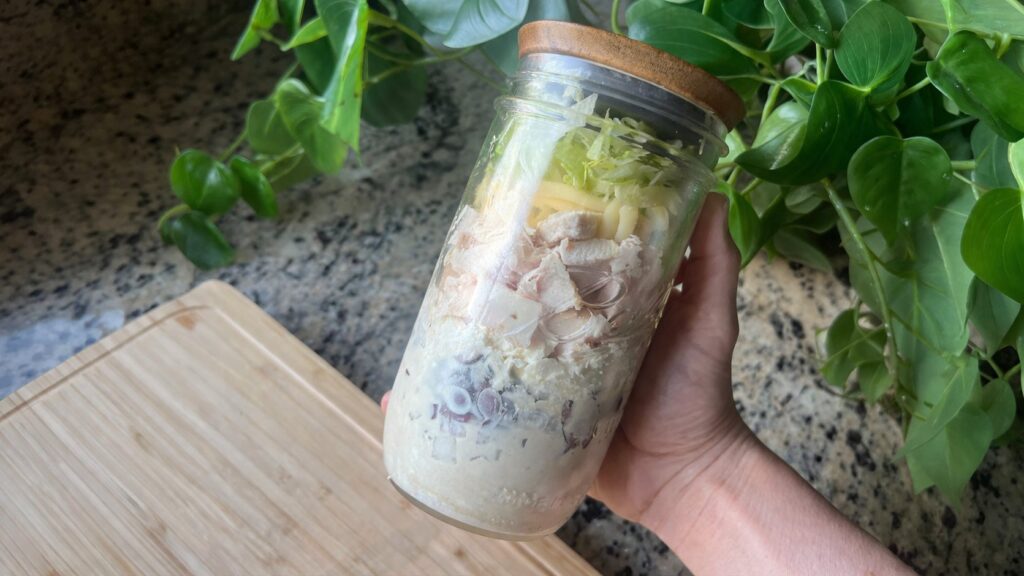
The mason jar isn’t just a cute container choice either. There’s a method to it. Dressing goes on the bottom so it doesn’t touch the greens. Sturdy stuff like onion, olives, and chicken sits in the middle. Delicate lettuce stays on top. When you’re ready to eat, you shake it up or dump it in a bowl and everything gets coated evenly. It’s actually smart.
And because it keeps for up to four days in the fridge, you can make a few jars on Sunday and have lunch sorted for most of the week. Ten minutes of prep once and you’re done. That’s the kind of meal that actually fits into a real life.
Why This Recipe Works
The dressing is doing a lot here and it’s worth talking about. Most Greek-inspired salad dressings are just oil and lemon and maybe some oregano. Fine. This one has cottage cheese and tahini blended in, which gives it a creamy texture and a richness that feels more substantial without being heavy. The Dijon gives it a little bite. The lemon keeps it bright. It’s the kind of dressing that actually makes you want to eat the salad.
The rotisserie chicken is the protein anchor that makes this a lunch instead of a side dish. You don’t need to cook anything. Just pull it apart and pile it in. If you’re tracking macros or trying to stay higher protein, this is a solid move.
The pasta is not a diet sabotage. It’s there to add substance and make the meal satisfying enough that you don’t go back for snacks an hour later. One cup of cooked spiral pasta is not a lot, and when it’s surrounded by chicken, feta, and olives, it stretches far. Balance. That’s the whole thing.
And the layering order is doing real work. When you stack it right, the lettuce stays crisp even if the jar has been in your fridge since Sunday. That means you can actually meal prep this. Four jars on Sunday, four good lunches during the week. It holds up.
Let’s Talk Ingredients
1 tbsp cottage cheese
This might be the ingredient that makes you raise an eyebrow. Cottage cheese in a salad dressing sounds wrong, but it works. Blended with the other ingredients it disappears completely. You do not taste it as cottage cheese. What it does is add creaminess, a little protein, and a smooth texture that holds the dressing together. It also makes the dressing feel more substantial without adding a ton of calories. If you don’t have cottage cheese, you can swap in plain Greek yogurt and it’ll do a similar job.
2 tbsp tahini
Tahini is ground sesame paste and it’s the backbone of this dressing. It has a slightly nutty, slightly bitter flavor that balances beautifully with lemon juice. It also adds a silky texture that makes the whole dressing feel luxurious. Buy a good tahini and store it in the fridge once opened. The natural oils can separate, so just stir it before you use it. If you’ve only ever seen tahini in hummus recipes, this is a good reason to keep a jar around for other things.
1 tbsp mayo
Just one tablespoon, but it matters. Mayo adds a little richness and helps emulsify the dressing so it doesn’t separate in the jar. If you’re avoiding it for whatever reason, it can be left out. The dressing will be slightly thinner but still good.
1 tbsp Dijon mustard
Dijon is the secret weapon in a lot of good dressings. It adds a sharpness that cuts through the fat from the tahini and mayo, and it helps bind the dressing together. Don’t skip it. The flavor it adds is subtle but it rounds everything out.
Juice of 1 lemon
Fresh. Please. Bottled lemon juice will work in a pinch but the flavor is noticeably flat compared to fresh. The lemon is doing a lot here. It brightens the whole dressing, keeps the flavors from getting too heavy, and helps balance the richness from the tahini. Roll your lemon on the counter before cutting it to get more juice out.
1-2 tbsp water (optional)
After you mix the dressing, taste it and see if it needs thinning. The tahini and cottage cheese can make it thicker than you want, especially once it’s been in the fridge. A splash of water loosens it up and makes it easier to coat everything when you shake the jar. Add a little at a time and stop when it’s the consistency you like.
1-2 tbsp chopped red onion
Red onion gives the salad a sharp, slightly sweet bite that cuts through the richness of the dressing and the saltiness of the feta and olives. The small amount means it adds flavor without overwhelming everything else. If raw onion is too intense for you, soak the chopped pieces in cold water for ten minutes before adding them. It takes the edge off without losing the flavor entirely.
2 tbsp Kalamata olives, sliced
Kalamata olives are briny and meaty and they’re an essential part of what makes this taste like a Greek salad rather than just a salad with feta in it. They’re higher in fat but it’s the kind of fat that makes food taste good and keeps you satisfied. Slice them before adding so you get a little olive in each bite instead of whole olives that take over. If you can’t find Kalamata, any good quality black olive will work, but Kalamata has a more pronounced flavor that’s worth seeking out.
2 tbsp crumbled feta
Feta brings the saltiness that ties everything together. Crumble it yourself from a block if you can. Pre-crumbled feta is convenient but it’s drier and less creamy than block feta. The block kind has more moisture and a better texture. Feta also adds a little protein and fat which both contribute to keeping you full after this meal.
1/2 to 1 cup chopped rotisserie chicken
This is where the protein punch comes from. Rotisserie chicken is one of the best shortcuts in a busy kitchen. It’s already cooked, it’s already seasoned, and it tastes like you did more work than you did. The amount is flexible depending on your appetite and your macros. Half a cup is a lighter portion. A full cup makes this a more substantial meal. I usually go closer to a cup because I want to be full until dinner.
1 cup cooked spiral pasta, cooled
Spiral pasta works great here because the corkscrew shape holds onto the dressing and catches little bits of feta and onion. Make sure it’s fully cooled before adding it to the jar. Warm pasta will wilt the lettuce and make the whole thing soggy. You can cook the pasta the night before and store it in the fridge so it’s ready to go when you’re building your jars. Any short pasta shape works. Rotini, farfalle, penne, whatever you have.
1/2 cup shredded iceberg lettuce
Iceberg gets a bad reputation as a boring lettuce but it’s the right choice here for one reason: it stays crisp. Softer greens like spinach or romaine will start to wilt within a day in the jar. Iceberg holds up for days, which makes this actually meal-preppable instead of theoretically meal-preppable. Shred it thin so it integrates into the salad when you toss everything together rather than sitting in big limp leaves on top.
Meal Prep This on Sunday and Thank Yourself All Week
The reason this recipe exists in a mason jar is not aesthetic. It’s function. The layering method keeps everything fresh for up to four days in the fridge, which means you can build your jars on Sunday and have lunch sorted from Monday through Thursday without thinking about it again.
Here’s how to make it work. Cook your pasta on Sunday, rinse it with cold water, and let it drain completely. Pull your rotisserie chicken apart and store it in a container. Then it’s just an assembly line. Four jars, dressing on the bottom of each one, then layer everything in order from sturdy to delicate. Seal them up and stack them in the fridge.
A few things that will keep your jars in good shape: make sure the lettuce is dry before it goes in. Wet lettuce speeds up wilting. Pat it with a paper towel or spin it in a salad spinner if you have one. Also make sure the pasta is fully cooled and not warm at all. Warm pasta creates condensation in the jar and that moisture will work against you.
When it’s time to eat, you have two options. Shake the jar vigorously with the lid on and eat straight from the jar. Or dump it into a bowl and toss it. Either works. The shake-and-eat method is better for eating at your desk. The bowl method gives you a nicer meal if you’re home.
One more thing: the dressing can be made in bigger batches and stored separately in the fridge for up to a week. If you want to make variations on your jars throughout the week, like swapping the chicken for shrimp or adding different vegetables, having the dressing ready means it takes two minutes to build a jar.