


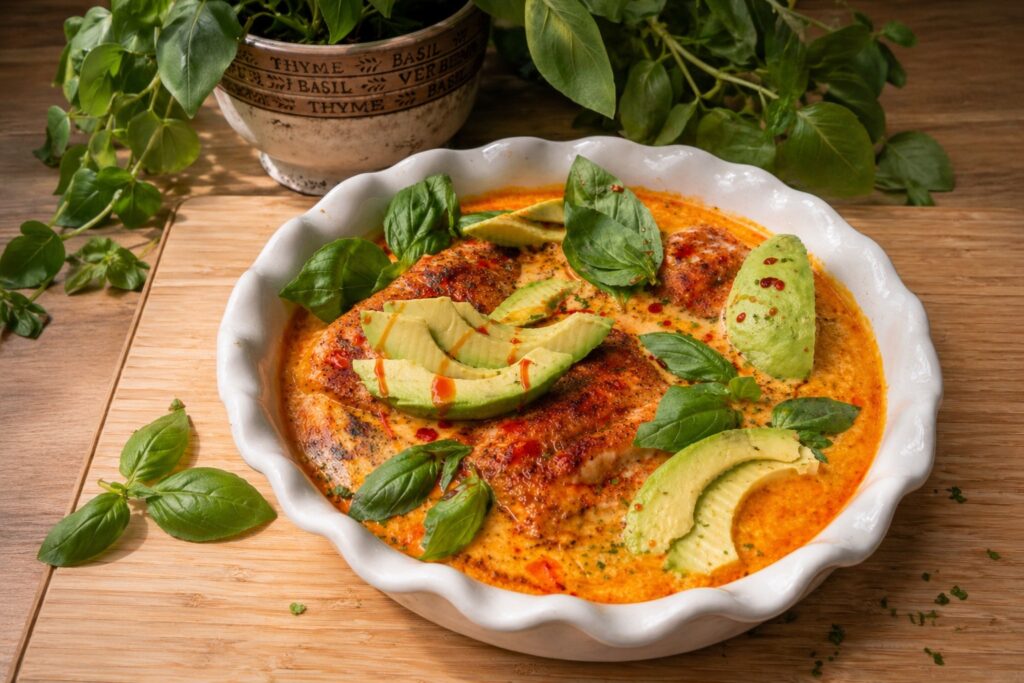
The Weeknight Salmon That Tastes Like You Tried
Salmon is one of those proteins that gets rotated into the dinner lineup out of obligation more than excitement. You know it is good for you. You know you should eat it. But plain baked salmon with a squeeze of lemon gets old fast, and most people do not have the time or energy on a Tuesday night to do anything more interesting with it.
This recipe fixes that without adding any complexity. Three salmon fillets go into a baking dish. You whisk together coconut milk and Thai red curry paste, pour it over the fish, add a drizzle of honey and some seasoning, and put it in the oven. Twenty-five minutes later you have salmon sitting in a creamy, spiced coconut curry sauce that tastes like something from a restaurant.
The sauce does all the work. The coconut milk keeps the salmon moist as it bakes and the curry paste seasons everything underneath and around the fish at the same time. By the time it comes out of the oven the sauce has thickened slightly and absorbed the drippings from the salmon, which makes it even better spooned over rice.
Thirty-four grams of protein per serving. One baking dish. No stirring, no flipping, no babysitting. This is the kind of dinner that makes you feel like you have your week together even when you do not.
One Pan, Twenty-Five Minutes, No Shortcuts That Matter
The reason this recipe works as well as it does is that the coconut milk and curry paste create a self-basting environment in the baking dish. The salmon sits directly in the sauce and as it bakes, the fat from the fish renders into the coconut milk below, enriching the sauce and keeping the fillet moist from the bottom up. The top gets the honey and spice treatment, which caramelizes slightly in the oven and creates a slightly sticky, flavored crust on the surface.
Thai red curry paste is doing more work per tablespoon than almost any other ingredient you can add to a dish. It is a concentrated blend of red chiles, lemongrass, galangal, kaffir lime leaves, garlic, and shrimp paste. Two tablespoons of it dispersed through a can of coconut milk seasons the entire dish with a complexity that would take a lot longer to build from scratch. It is one of those pantry ingredients worth always having around.
Honey is a small addition but it matters. It adds a subtle sweetness that balances the heat from the curry paste and the chili powder, and it creates that slightly lacquered finish on top of the salmon as it bakes. A tablespoon is not enough to make the dish taste sweet. It is just enough to round out the edges.
Paprika and chili powder on top add a warm, slightly smoky seasoning layer to the surface of the fish that the curry sauce underneath does not provide on its own. They are the reason the salmon has flavor and color on top rather than just on the bottom from the sauce.
Let’s Talk Ingredients
3 salmon fillets
Skin-on or skinless both work. Skin-on fillets hold together slightly better in a saucy baking dish and the skin keeps the bottom of the fish from drying out. If you are using skinless, just be careful when serving since the fillet can break apart more easily in the sauce. Aim for fillets that are similar in thickness so they cook evenly in the same amount of time. If one fillet is significantly thinner than the others, check it a few minutes early.
1 can (13.5 oz) full-fat coconut milk
Full-fat, not light. Light coconut milk is thinner and does not create the same creamy, rich sauce. Shake the can before opening since the fat separates and sits at the top. Pour the whole can into the dish. The fat content is what makes the sauce silky and what keeps the salmon moist as it bakes. Do not substitute with coconut cream, which is thicker and can become too concentrated in the oven.
2 tbsp Thai red curry paste
The flavor engine of the whole dish. Red curry paste is more robust and slightly earthier than green curry paste, which tends to be fresher and more herby. Mae Ploy and Maesri are two widely available brands that are reliably good. Two tablespoons gives you a noticeable curry flavor without being overwhelming. If you want more heat and intensity, go up to three tablespoons. If you are cooking for people sensitive to spice, start with one and taste the sauce before adding the salmon.
1 tbsp honey
Balances the heat and adds a slight gloss to the top of the salmon as it bakes. Regular honey works fine. If you are keeping things lower sugar, a sugar-free honey substitute works at the same quantity. The amount is small enough that neither version will make the dish taste sweet.
1 tsp paprika
Adds a warm, slightly smoky flavor and a reddish color to the surface of the salmon. Smoked paprika is a great upgrade here if you have it. It adds a deeper, more complex smokiness that works really well with the coconut and curry flavors. Either version works.
1 tsp chili powder
Adds mild heat and a little earthiness to the top of the fish. Chili powder is a blend of dried chiles and other spices rather than straight cayenne, so it is warm rather than sharp. If you want more heat, add a pinch of cayenne alongside it. If you want less, reduce to half a teaspoon.
Salt and pepper, to taste
Season the salmon before it goes into the dish in addition to the paprika and chili powder. The curry paste and coconut milk bring some saltiness but the fish itself needs seasoning. A good pinch of salt on each fillet before baking makes a noticeable difference in the finished dish.
Cooked rice, for serving
White rice is the classic pairing and it is right. It absorbs the curry coconut sauce beautifully and balances the richness of the salmon. Jasmine rice is the best match flavor-wise. Brown rice works if that is your preference. Cauliflower rice is a good low-carb option that still soaks up the sauce. Whatever you use, make sure it is cooked and ready before the salmon comes out of the oven so you can serve immediately while the sauce is hot.
Sliced avocado (optional)
A cool, creamy contrast to the warm, spiced salmon and sauce. Avocado on top of a hot curry dish sounds like an unusual pairing but it works really well. The fat in the avocado complements the coconut milk and the mild flavor balances the heat from the curry. Slice it just before serving so it does not brown.
Fresh basil (optional)
Thai basil is ideal here because it has a slightly anise-forward flavor that is natural alongside curry and coconut. Italian basil works too. Tear or slice it and add right before serving so it stays bright and fragrant. A small handful scattered over the top makes the dish look finished and adds a herby brightness that the sauce does not have on its own.
What to Do With the Leftovers
This recipe makes three servings and leftovers are worth thinking about because the salmon and sauce hold up better than you might expect. The coconut curry sauce actually gets richer and more flavorful overnight as the salmon infuses it further.
Store leftover salmon and sauce together in an airtight container in the fridge for up to two days. Reheat gently in a covered pan over low heat with a splash of water to loosen the sauce, or in the microwave at 50 percent power to avoid drying out the fish. High heat reheating turns salmon rubbery fast, so go low and slow.
Leftover salmon flaked into the sauce and served over rice noodles instead of rice is a completely different meal from the same leftovers. The flaked fish distributes through the sauce and it becomes more of a curry situation than a composed fish dish. Add a handful of spinach or bok choy to the pan while reheating and you have a full meal.
The sauce on its own is also worth saving if you have extra. It works as a base for a quick weeknight curry with whatever vegetables or protein you have on hand. Add some chickpeas and broccoli, simmer for 10 minutes, and serve over rice. It does not taste like leftovers at all.
For meal prep, this works well if you are comfortable eating reheated salmon. Make the full batch, portion into three containers with rice, and store in the fridge. Reheat as described above and add fresh avocado and basil at serving time rather than when assembling.