

The Recipe That Looks Impressive and Takes 20 Minutes
Spring rolls are one of those things that look like they require more effort than they do. You see them at restaurants, beautifully wrapped and perfectly translucent with all the fillings visible through the rice paper, and you assume there is some technique involved that you do not know. There is not. If you can fold a burrito, you can make a spring roll.
These are fresh spring rolls, not fried. Rice paper wrappers filled with shredded chicken, rice noodles, cucumber, green onion, jalapeño, and fresh herbs. They are light and crisp and full of flavor, and they come together in about 20 minutes once you have your fillings prepped.
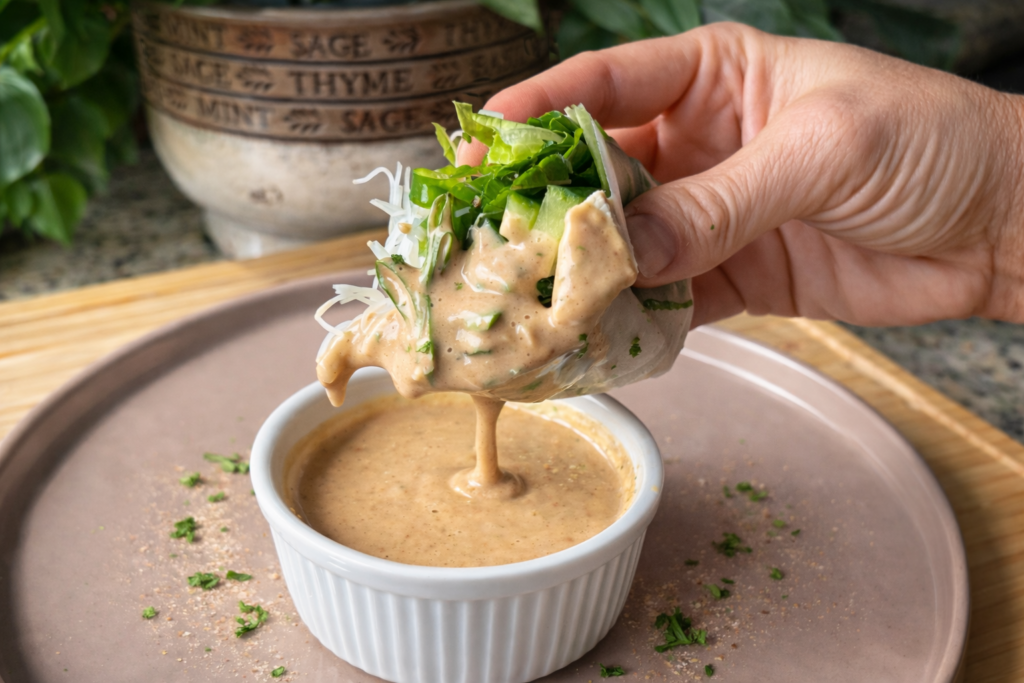
The thing that takes them from good to great is the dipping sauce. These are built to be served with the homemade peanut sauce on the blog, which is a proper cooked peanut sauce made with coconut milk, bone broth, soy sauce, hoisin, fish sauce, and fresh lime. It is rich and creamy and has enough complexity that it makes everything you dip into it taste better. If you have not made it yet, make it first. These spring rolls are good on their own but they are genuinely excellent with that sauce.
This recipe is also one of the more customizable things you can make. The filling list is a starting point, not a rule. Swap the chicken for shrimp. Add avocado. Leave out the jalapeño if your household does not eat spicy. Use whatever fresh herbs you have. The rice paper wrapper is the constant. Everything inside is yours to adjust.
Fresh, Fast, and Actually Filling
The combination of shredded chicken and rice noodles is what makes these spring rolls satisfying rather than just a light snack. The chicken brings protein and substance. The rice noodles add enough carbohydrate to make the rolls feel like a real meal. Together with the fresh vegetables and herbs, you get something that covers a lot of nutritional ground without feeling heavy.
Fresh mint and basil are not garnishes here. They are flavor. Do not skip them or use dried versions. The whole point of a fresh spring roll is the brightness of the raw ingredients, and the herbs are a big part of that. Mint adds a cool, clean note. Basil brings a slightly sweet, peppery quality. Together they make the inside of the roll taste alive in a way that a filling without herbs does not.
Jalapeño adds heat and a fresh, grassy flavor that cuts through the richness of the chicken and noodles. If you are rolling these for people who do not eat spicy food, just leave it out. If you want more heat, add extra slices or serve chili oil alongside the peanut sauce.
The cucumber is there for crunch and freshness. Thinly sliced so it rolls easily without creating bulk that makes the wrapper hard to seal. Same principle applies to all the fillings. Everything should be in strips or small pieces so the roll comes together tightly and holds its shape.
Let’s Talk Ingredients
8 to 10 rice paper spring roll wrappers
The wrapper is the technique part of this recipe and it takes one or two rolls to get the feel for it. Rice paper comes in round sheets that are stiff and brittle dry. You soften them by dipping in warm water for about 5 to 10 seconds until they become pliable and slightly tacky. Do not over-soak. If the wrapper is too wet it will tear when you try to roll it. Pull it out when it is just starting to soften and let the residual moisture finish the job on your work surface. It will continue to soften for a few seconds after you lay it down.
1 1/2 to 2 cups shredded chicken
Rotisserie chicken is the fastest and easiest option here. It is already cooked and seasoned and shreds in a few minutes. Poached chicken breast or thighs also work well. The chicken should be at room temperature or slightly warm, not cold from the fridge, which can make the wrappers seize up and stick. Season it lightly if it is plain cooked chicken since the peanut sauce will carry most of the flavor but the filling should not be bland on its own.
1 cup cooked rice noodles
Thin rice vermicelli noodles are the right choice here. Cook according to package directions, drain, and rinse with cold water to prevent sticking. Toss with a tiny drizzle of sesame oil if they are going to sit for a few minutes before assembly. They should be loose and easy to separate, not clumped together. Clumped noodles are harder to portion into the rolls evenly.
3 to 4 green onions, sliced
Sliced lengthwise into thin strips so they lay flat inside the roll. Green onions add a mild onion flavor and a little texture without being as sharp as raw white or red onion. Both the white and green parts work here.
1 cucumber, thinly sliced
Cut into thin matchsticks or thin rounds. Matchsticks are easier to roll because they lay flat. Thin rounds can create uneven bulk that makes the wrapper harder to seal neatly. English cucumbers work well because they have fewer seeds and thinner skin. Regular cucumbers are fine too, just remove the seeds if they are large.
1 jalapeño, thinly sliced
Thin rounds or strips that distribute evenly through the roll. Keep the seeds in for more heat, remove them for less. This is fully optional and easy to leave out if you are making these for people who do not eat spicy food. If you are setting up a build-your-own situation, put the jalapeño out separately so everyone can add their own.
Fresh mint leaves
Add whole leaves to the roll. Do not chop them. Whole mint leaves stay more fragrant and have a better texture inside the wrapper than chopped mint, which can wilt and turn dark quickly. Use as many or as few as you like. Three to four leaves per roll is a good starting point.
Fresh basil leaves
Same approach as the mint. Whole leaves, tucked in with everything else. Thai basil is the traditional choice for spring rolls and has a slightly more anise-forward flavor than Italian basil. Either works. Use what you have.
Fresh cilantro (optional)
For people who like it, cilantro adds a bright, citrusy quality that works really well with the peanut sauce. For people who do not, leave it out entirely. There is no substitute needed. The mint and basil carry the herb flavor on their own.
Shredded cabbage (optional)
Adds crunch and a little volume without changing the flavor much. Purple cabbage also adds color, which makes the rolls look more interesting when you see the filling through the rice paper. A small handful per roll is enough.
Shredded carrots (optional)
Another crunch addition that also adds color. Grated or julienned into thin strips. They add a subtle sweetness and make the rolls look more vibrant and colorful. Carrot matchsticks are easy to buy pre-shredded if you want to save prep time.
Homemade peanut sauce (for dipping) — get the full recipe here: Delicious Peanut Sauce
This is the pairing that makes the whole recipe. The peanut sauce is a cooked sauce made with peanut butter, coconut milk, bone broth, hoisin, soy sauce, fish sauce, mirin, rice wine vinegar, and fresh lime. It is blended smooth and has a creamy, savory, slightly sweet depth that store-bought peanut sauce does not come close to. Make it ahead and have it ready before you start rolling. These spring rolls are good without it. With it, they are the kind of thing people ask you to make again.
How to Roll These Without Them Falling Apart
The rice paper wrapper is where most people run into trouble the first time. The timing of the soak and the amount of filling are the two things that make or break the roll.
For the soak, warm water works better than cold or hot. Cold water takes too long and the wrapper can become uneven in softness. Hot water softens it too fast and makes it fragile. Warm, comfortable to touch, is the right temperature. Dip for 5 to 10 seconds, just until the wrapper starts to feel pliable, then lay it flat immediately on a smooth, damp work surface. A damp cutting board or a clean damp kitchen towel works well. The wrapper will continue to soften as you add your fillings so pull it out slightly before it feels fully soft.
For the filling, less is more. It is tempting to pile everything in but overfilled rolls are impossible to seal and fall apart when you pick them up. A small handful of noodles, a few pieces of chicken, and a couple of each vegetable and herb is enough. The wrapper should be able to stretch slightly over the filling without tearing.
To roll, place the filling in the lower third of the wrapper. Fold the bottom edge up over the filling, then fold both sides in like a burrito, then roll forward tightly until it is sealed. The tacky texture of the rice paper seals itself as you roll. No water or egg wash needed.
If a wrapper tears, do not panic. Lay a second wrapper flat and place the torn roll on top. The outer wrapper will stick and seal everything together. Double-wrapping also makes the rolls sturdier if you are packing them for lunch.
For meal prep, store uncut rolls in an airtight container with a damp paper towel layered between them so they do not stick together. They keep in the fridge for up to two days. The wrapper will become slightly chewier as it sits but the rolls hold up well. Store the peanut sauce separately and dip fresh each time.